
SkyTrak · Launch Monitors Review
SkyTrak+ Launch Monitor Review
Ball and club data with no stickers, at a home-simulator price.
Excellent
Tour Issue Score 8.9 · Ranked #4 of 12 in Launch Monitors
Best for: Serious improvers and home-simulator golfers who want tour-style ball and club data indoors without a five-figure commercial system.
The Bottom Line
Ball and club data with no stickers, at a home-simulator price.. The SkyTrak+ Launch Monitor scores 8.9 out of 10 in our research-based review, a excellent mark that puts it at #4 of 12 Launch Monitors in our rankings. Its strongest fit: Serious improvers and home-simulator golfers who want tour-style ball and club data indoors without a five-figure commercial system..
Full Review
The Short Version
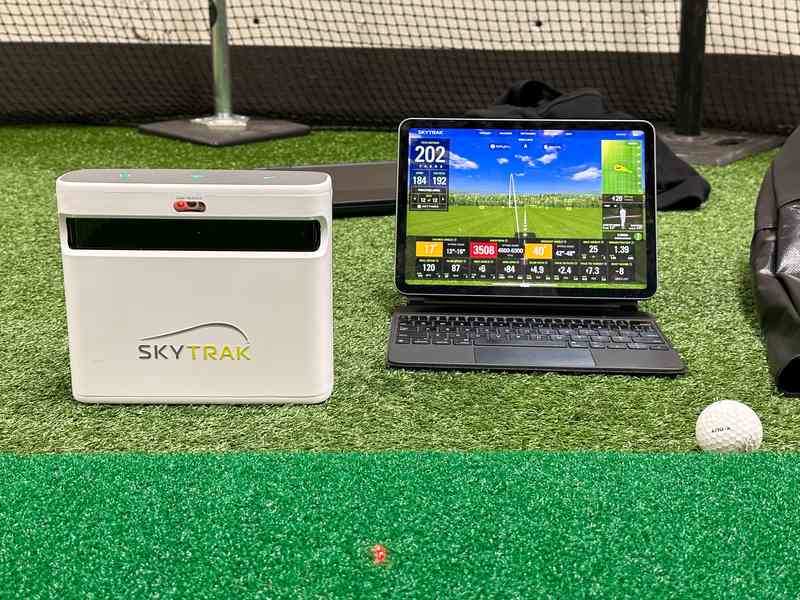
The SkyTrak+ is the second-generation version of the launch monitor that made home simulator golf mainstream. It pairs a photometric camera system with dual Doppler radar, which lets it measure club data, path, face angle and speed, as well as ball flight, with no stickers on the club and no special balls. Published head-to-head testing consistently places its indoor accuracy close to systems costing two or three times as much, which is why it remains the default recommendation for a serious home bay on a real-world budget.
Performance
Performance is built on the dual measurement system. The camera captures ball speed, launch angle and spin, while the radar adds club delivery data the original SkyTrak lacked. Independent comparisons against premium camera units have repeatedly found carry distances within a small margin indoors, and reviewers praise the faster shot-to-show time from the upgraded processor. The data set covers carry and total distance, ball and club speed, back and side spin, launch and descent angles, club path, face angle, face-to-path and smash factor, enough for genuine gapping sessions, bag mapping and skills tests rather than novelty range numbers. The native software adds shot history, tracer views and practice games, and third-party simulator support is broad.
Forgiveness
Forgiveness here means how much the device tolerates imperfect setup and imperfect swings. The hitting area is about 40 percent larger than the original model's, which reduces no-reads, but the ball still needs to sit in a defined zone beside the unit, and that discipline takes a session or two to learn. Mis-hits are measured honestly rather than smoothed over, which is good for improvement but can be humbling. Outdoor use is the weak point in most published testing: the system is at its best indoors off a mat, and bright sunlight or grass lies produce more missed or questionable reads than a behind-the-ball radar unit.
Feel and Sound
A launch monitor has no impact feel, so feel is about the experience of using it. The SkyTrak+ is compact and light enough to carry to a range, sets up beside the ball in minutes, and connects by 5GHz Wi-Fi or direct mode to phones, tablets and PCs. Reviewers describe the app interface as one of the friendlier in the category, with color-coded shot feedback that a golfer can act on without a coaching dictionary. There is no distracting sound beyond a soft capture confirmation; the unit simply sits quietly and reports.
Value
At a list price around $1,995, and frequently promoted below that as the newer ST MAX sits above it, the SkyTrak+ undercuts the Bushnell Launch Pro and Foresight GC3 class while delivering club data those systems have historically gated behind subscriptions or higher tiers. The honest caveat is software: annual SkyTrak plans are needed for the full practice suite and course play, and third-party simulator software costs extra again. Budget for the plan, not just the box, and the value case is strong; ignore it, and the sticker comparison misleads.
Who Should Buy It
Golfers building a garage or spare-room simulator who will actually practice with data, not just play virtual rounds. It also suits competitive amateurs who want club-path and face numbers for structured practice at home. Casual golfers who only want occasional range estimates will be happier spending far less on a Doppler-only unit, and golfers who demand tour-truck absolute accuracy or advanced putting analysis should step up to a premium camera system.
Verdict
The SkyTrak+ earns its reputation: credible ball and club data, a mature software ecosystem and genuine portability at a price well below the professional tier. Its limits, a small hitting zone, subscription software and weaker outdoor performance, are real but well documented and manageable indoors, where most owners use it. For a home simulator built around practice, it is one of the easiest recommendations in the category. This is a research-based review synthesized from published reviews, independent test data, and manufacturer specifications; no personal testing was conducted.
What We Like
- Dual Doppler radar plus photometric camera measures both ball and club data with no stickers or special balls
- Published comparisons put carry accuracy within a few yards of far more expensive camera systems indoors
- Club path, face angle, club speed and smash factor included, data the original SkyTrak could not provide
- Works indoors and outdoors, with a 40% larger hitting area than the original SkyTrak
- Broad simulator ecosystem: native SkyTrak software plus GSPro, E6 Connect, TGC 2019 and course-play options
- Compact, portable unit with USB-C charging, 5GHz Wi-Fi and direct-mode connection
What to Consider
- Advanced features and course play sit behind annual software plans on top of the hardware price
- Small hitting zone requires precise ball placement compared with overhead camera systems
- Outdoor use off grass is less reliable than indoor mat use, and bright sunlight can affect reads
- Battery life of roughly 4.5-5 hours is shorter than some portable rivals
- No putting analysis at the level of dedicated camera-based competitors
Specifications
| Technology | Dual Doppler radar plus photometric camera; no club stickers or special balls required |
|---|---|
| Data | Ball speed, club speed, launch angle, spin, carry/total distance, club path, face angle, face-to-path, smash factor, descent angle and shot shape |
| Hitting Zone | Approx. 4.5 x 4.5 in area beside the unit; about 40% larger than the original SkyTrak |
| Battery and Size | Rechargeable lithium-polymer, about 4.5 hours; 6.75 x 7.75 x 2.625 in, about 2.7 lb; USB-C |
| Software | SkyTrak app (iOS, Android, PC, Mac) with paid annual plans for full features; compatible with GSPro, E6 Connect, TGC 2019 and course-play packages |
Score Breakdown
Scores are research-based, drawn from manufacturer specs, tour adoption, and published independent test data. How we score
More Rangefinders Reviews
All Rangefinders →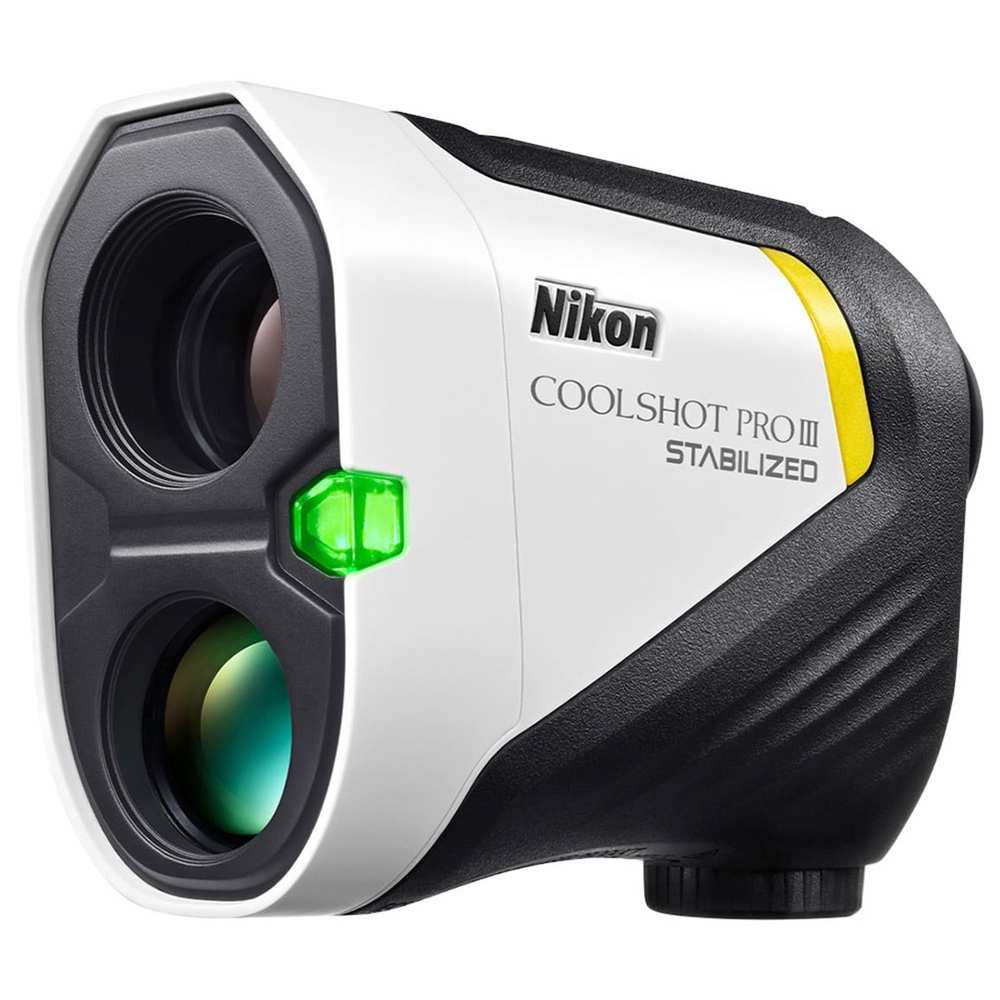
Nikon
Nikon COOLSHOT PROIII Stabilized Rangefinder
Voice Caddie
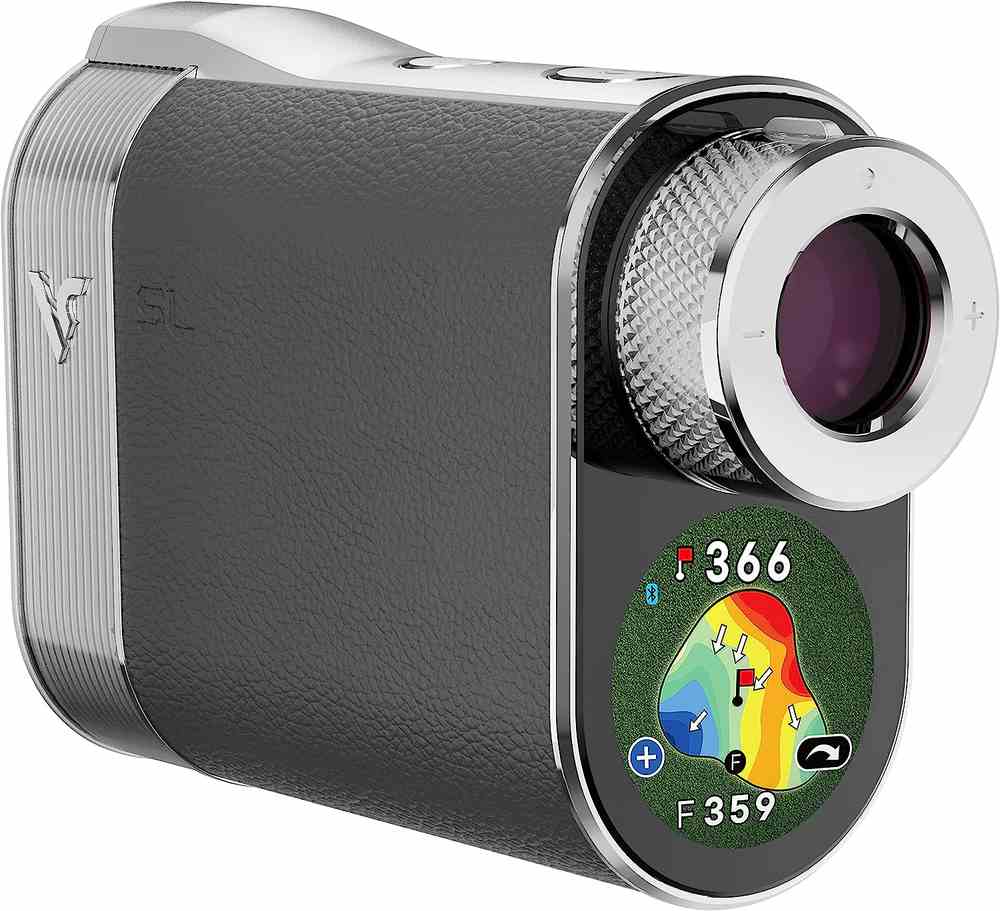
Voice Caddie SL3 Active Hybrid GPS Rangefinder
Bushnell
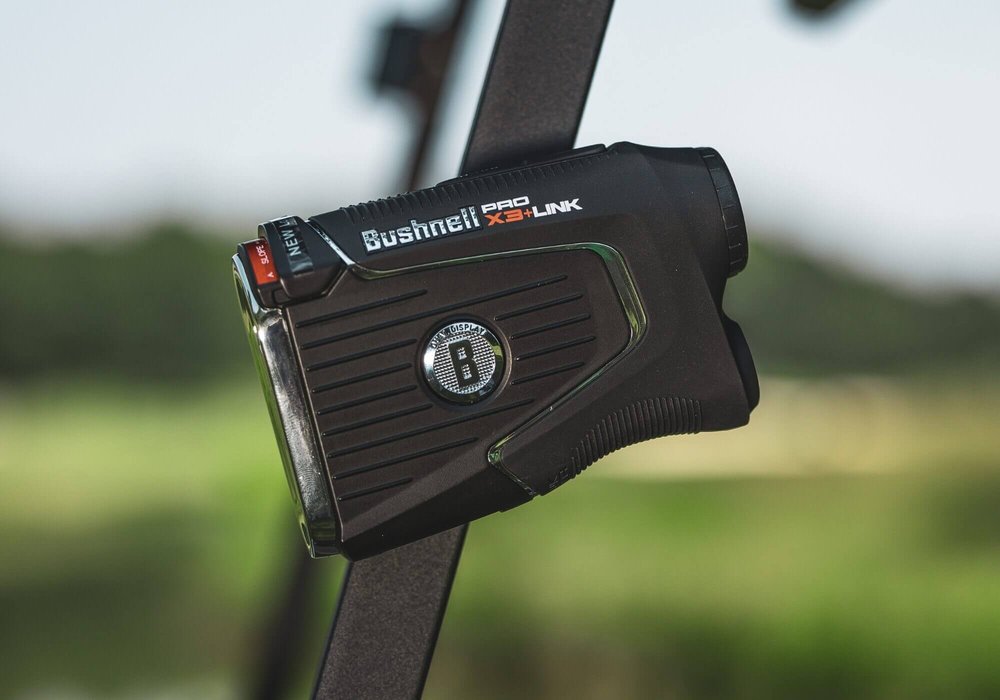
Bushnell Pro X3+LINK Rangefinder
Bushnell
Bushnell Tour Hybrid Rangefinder
Bushnell
Bushnell Tour V6 Shift Rangefinder
Bushnell
Bushnell Tour V7 Shift Patriot Pack Rangefinder
FlightScope
FlightScope Mevo Gen 2 Launch Monitor
Voice Caddie