
Lag Shot · Training Aids Review
Lag Shot 7 Iron Swing Trainer Review
A hittable, whippy-shafted 7-iron that makes lag a feel you can see in ball flight.
Excellent
Tour Issue Score 8.9 · Ranked #6 of 18 in Training Aids
Best for: Golfers who cast, flip or rush their transition and want real ball-flight feedback on lag and tempo.
The Bottom Line
A hittable, whippy-shafted 7-iron that makes lag a feel you can see in ball flight.. The Lag Shot 7 Iron Swing Trainer scores 8.9 out of 10 in our research-based review, a excellent mark that puts it at #6 of 18 Training Aids in our rankings. Its strongest fit: Golfers who cast, flip or rush their transition and want real ball-flight feedback on lag and tempo..
Full Review
The Short Version
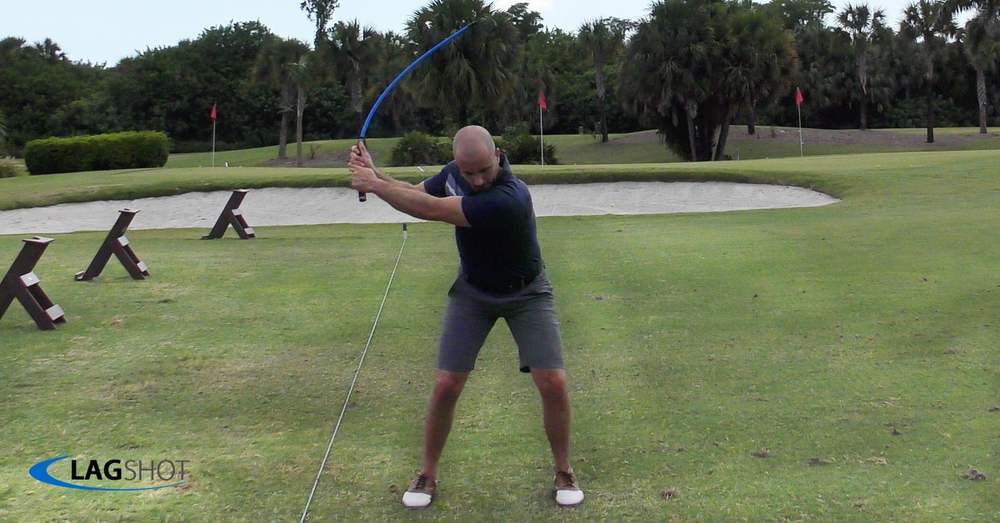
The Lag Shot 7 Iron is a hittable training club, not a swing-into-the-air aid: a heavy 7-iron head on a very flexible blue LagFlex shaft, built to teach lag, tempo and sequencing. It was named a Golf Digest Editors' Choice for best swing trainer, and independent reviews consistently say the same thing, because you can hit real balls with it, the ball flight itself becomes the feedback, which separates it from tempo trainers you cannot strike a ball with.
Performance
The mechanism is simple and unforgiving. The whippy shaft loads heavily in transition, so a rushed, casting or flipping motion leaves the clubhead trailing and produces weak, poorly struck shots, while a smooth, sequenced downswing lets the shaft unload into impact. Published reviews from teaching-focused outlets describe golfers using it to groove a slower, smoother transition, hold wrist angles longer, and deliver the club with hands leading, the classic lag pattern. Because the head is a real, hittable 7-iron at standard length and loft, practice transfers directly: reviewers note using it as a warm-up club before rounds to sync timing, then seeing cleaner contact with their normal irons. It is not a speed trainer; overspeed sticks address a different problem.
Forgiveness
Forgiveness is deliberately low at first, and that is the point. Multiple reviews warn that the Lag Shot punishes poor timing in the opening sessions, with mishits that feel obvious through the flexible shaft. That feedback loop is also what makes it learnable: half swings and slow rehearsal swings are the recommended starting point in the included video series, led by a three-time PGA Teacher of the Year, and reviewers report the club becoming markedly easier to hit as sequencing improves. Golfers who expect instant results without reps will be frustrated; golfers willing to start slow get a clear, honest signal on every swing.
Feel and Sound
Feel is the entire product. Reviewers describe the head as noticeably heavy and the shaft as extremely flexible, often compared to a wet noodle at first waggle, so the sensation of the club loading at the top and releasing through impact is exaggerated compared with a normal iron. Solid strikes feel smooth and compressed; early releases and flips feel floppy and weak, a contrast published reviews cite as the reason the lesson sticks without conscious mechanical thoughts. At impact the club produces a normal iron-like strike sound when timed well, because it is striking a real ball with a real head in a jet-black, game-improvement style profile.
Value
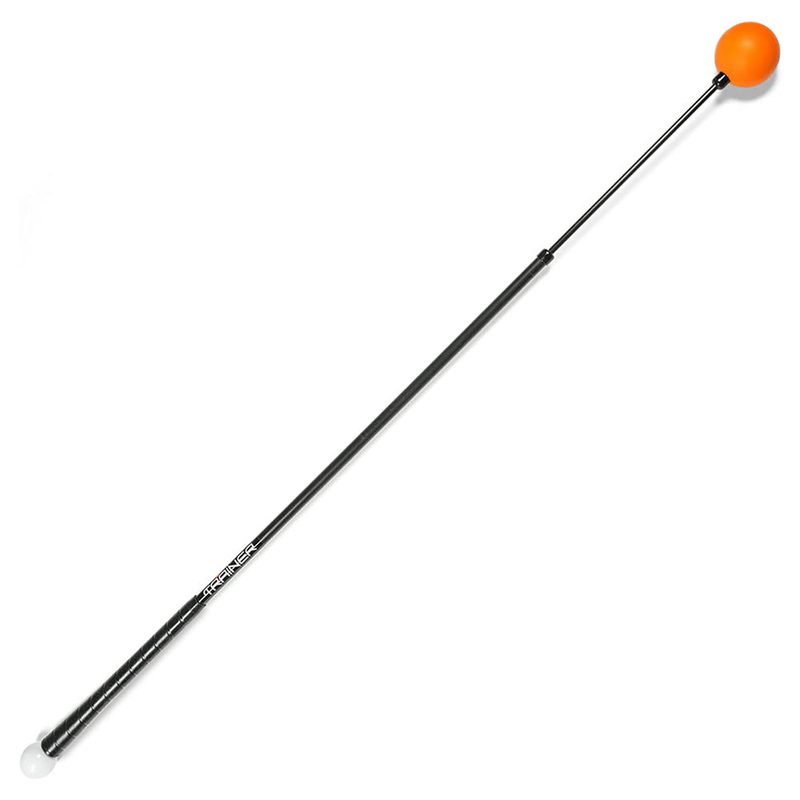
At $119 list for the 7-iron, the Lag Shot costs more than simple tempo sticks and less than most electronic swing analyzers, with driver and 54-degree wedge versions and a combined set available for more. Value rests on two inclusions: the free video training series that tells you how to interpret the feedback, which reviewers say matters because there are no printed instructions, and a 30-day money-back guarantee from the manufacturer that lowers the risk of trying it. Against its closest rival, the Orange Whip, the premium is justified for most buyers by one fact alone, you can hit balls with the Lag Shot and you cannot with the Whip.
Who Should Buy It
Golfers who cast, flip or scoop at the ball, rush their transition, or lose lag and distance, at almost any handicap, versions exist for men, women, taller XL players and juniors, in right- and left-handed models. It also suits golfers who want a legitimate warm-up club. Skip it if your tempo and sequencing are already sound and your goal is raw clubhead speed, or if you can only practice indoors with no net to hit into.
Verdict
The Lag Shot earns its Editors' Choice reputation by making an abstract feel, lag, physical, immediate and verifiable through real ball flight. It is humbling for the first few sessions and priced like a serious training tool, but for the specific faults it targets, published reviews are unusually unified that it works. This is a research-based review synthesized from published reviews, independent test data, and manufacturer specifications; no personal testing was conducted.
What We Like
- Hittable real 7-iron head, so ball flight gives honest, immediate feedback unlike air-only tempo trainers
- Very flexible LagFlex shaft forces a smooth transition and teaches genuine lag and sequencing
- Named a Golf Digest Editors' Choice for best swing trainer
- Free video training series with a three-time PGA Teacher of the Year included
- Doubles as a pre-round warm-up club to sync tempo and timing
- Men's, Lady, XL and Junior versions in right- and left-handed models, with a 30-day money-back guarantee
What to Consider
- Deliberately unforgiving at first, poor timing produces obvious mishits in early sessions
- Requires a range or a net to get ball-flight feedback; not useful swinging into empty air alone
- No printed instructions included, so the video series is essential to interpret results
- Black clubhead finish shows wear marks quickly when hitting balls regularly
- Driver and wedge versions cost extra if you want the full Triple Threat set
Specifications
| Length | 37 inches (standard men's 7-iron) |
|---|---|
| Loft | 34 degrees |
| Head | Hittable 7-iron head, jet-black finish, 272g head weight (men's standard) |
| Shaft | LagFlex very flexible graphite shaft (blue) |
| Versions | Men's, Lady, XL and Junior; right- and left-handed; video series included |
Score Breakdown
Scores are research-based, drawn from manufacturer specs, tour adoption, and published independent test data. How we score
More Training Aids Reviews
All Training Aids →
Callaway
Callaway Alignment Stix
PuttOut
PuttOut Pressure Putt Trainer
Divot Board
Divot Board Swing Training Aid
Orange Whip
Orange Whip Full Size Swing Trainer
TheStack
TheStack System Swing Speed Trainer
DJI
DJI Osmo Pocket 3 Vlogging Camera

EyeLine Golf
EyeLine Golf Putting Alignment Mirror
PRGR