Wilson · Irons Review
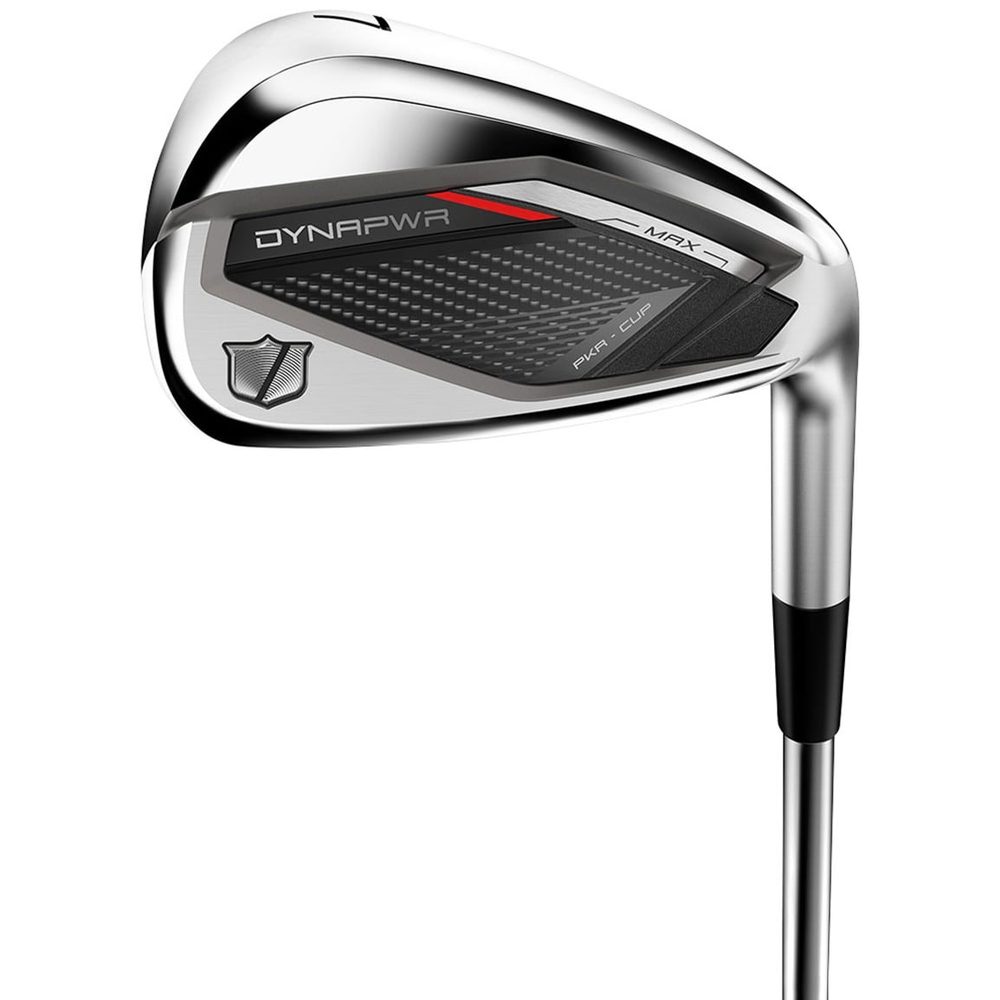
Wilson DYNAPWR Max Irons (2025) Review
Maximum forgiveness and the highest launch in Wilson's 2025 DYNAPWR iron family
Excellent
Tour Issue Score 8.7 · Ranked #51 of 67 in Irons
Best for: Mid- to high-handicap golfers and slower swingers who need maximum forgiveness, high launch and help holding greens
The Bottom Line
Maximum forgiveness and the highest launch in Wilson's 2025 DYNAPWR iron family. The Wilson DYNAPWR Max Irons (2025) scores 8.7 out of 10 in our research-based review, a excellent mark that puts it at #51 of 67 Irons in our rankings. Its strongest fit: Mid- to high-handicap golfers and slower swingers who need maximum forgiveness, high launch and help holding greens.
Full Review
The Short Version
The 2025 Wilson DYNAPWR Max is the super game-improvement entry in Wilson's refreshed DYNAPWR iron family: a hollow-body iron with the largest head in the line, weaker lofts than the standard DYNAPWR, a wide sole, and weighting pushed low and toward the toe. Golf.com's player testing of the 2025 DYNAPWR family describes the Max as the maximum-forgiveness, highest-launch option, built for golfers who struggle to get the ball airborne and to keep mishits playable. Where the standard DYNAPWR chases distance with a 28-degree 7-iron, the Max uses a 30-degree 7-iron and a bigger footprint to trade a little raw yardage for height, stability, and stopping power.
Performance
Two technologies do most of the work. The PKR-Cup face wraps around the sole perimeter and is shaped using Wilson's AI-generated variable face thickness process, which is intended to keep ball speed consistent across a wider area of the face rather than only in the center. Behind it, a Velocity Optimization Channel in the sole and behind the face allows more face flex at impact, supporting speed on the low strikes that high-handicap golfers produce most often. Published reviews of the 2025 family consistently credit the Max with the tightest dispersion of the two new models and with minimal distance drop-off on off-center hits, and its higher launch and spin profile means approach shots land steeper and hold greens instead of running through them. The lofts are strong by traditional standards but more moderate than the standard model, so distance claims should be judged against the flight, not the number stamped on the sole.
Forgiveness
Forgiveness is the entire brief here, and the design choices line up behind it. Mass removed from the heel through an open heel construction is repositioned toward the sole and toe, raising MOI and resisting the face twisting that turns toe strikes into weak, short misses. The low center of gravity helps launch the ball from imperfect lies, and the wide sole is built for efficient turf interaction, reducing the penalty for hitting slightly behind the ball. Reviewers who tested the wider 2025 family noted that even noticeably off-center strikes in the long irons retained useful carry, which is the practical test that matters for the golfers this iron is aimed at.
Feel and Sound
Wilson used topology optimization, redistributing material through the head based on modeled stress and vibration, to tune the Max's sound and feel, and published feedback on the family describes a solid, comparatively muted impact rather than the harsh click associated with older game-improvement irons. It will not replicate the soft, dense sensation of a forged player's iron, and better ball-strikers may find the feedback less precise about strike location. For its intended player, though, a stable, confidence-building strike sensation matters more than workability, and the generous head shape and moderate offset support that at address without looking extreme.
Value
At $799.99 in steel from Wilson, the DYNAPWR Max undercuts many headline game-improvement sets from larger brands while including current-generation face technology, and a graphite version is offered for golfers who want a lighter build. The honest caveats are resale and fitting: Wilson irons historically depreciate faster than the biggest brands, and because the lofts and launch profile are distinctive, a basic fitting to confirm gapping at the top and bottom of the set is money well spent. Judged purely on forgiveness technology per dollar at retail, it is one of the stronger value propositions in the 2025 super game-improvement class.
Who Should Buy It
The DYNAPWR Max fits mid- to high-handicap golfers, slower swingers, and anyone whose iron misses are thin, toe-side, or simply not getting high enough to hold greens. Golfers who already launch the ball high, who shape shots deliberately, or who prioritize forged feel should look at the standard DYNAPWR, the DYNAPWR Forged, or a player's-distance iron instead. Players who draw the ball strongly should also demo first, since the family's stability and offset are oriented toward helping a fade or slice stay playable.
Verdict
The DYNAPWR Max does the unglamorous work of game improvement properly: it launches the ball high, protects the misses its buyers actually make, and lands shots steeply enough to hold greens, all at a price below most of the category's big names. It is not the longest iron in the family and it is not aimed at shot-makers, but for golfers who need maximum help from their irons it is the most sensible DYNAPWR of the three. This is a research-based review synthesized from published reviews, independent test data, and manufacturer specifications; no personal testing was conducted.
What We Like
- PKR-Cup face with AI-generated variable face thickness keeps ball speed up across the face, including toe-side misses
- Low CG and toe-biased weighting from the open heel construction deliver the highest launch and MOI in the 2025 DYNAPWR family
- Velocity Optimization Channel supports face flex and speed on the low strikes its target player hits most
- Published testing of the 2025 family credits the Max with tight dispersion and minimal carry loss on off-center hits
- At $799.99 in steel it undercuts most big-name super game-improvement sets
What to Consider
- Largest, most offset head in the DYNAPWR family will not suit golfers who prefer a compact look at address
- Weaker lofts and high launch mean less raw distance than the standard DYNAPWR for faster swingers
- Feel is muted compared with forged irons, with less precise strike feedback for better players
- Wilson irons have historically held resale value less well than the biggest brands
Specifications
| Construction | Hollow-body super game-improvement head with PKR-Cup face and Velocity Optimization Channel |
|---|---|
| Lofts | 7-iron 30 degrees; weaker lofts than the standard DYNAPWR (28-degree 7-iron) for higher launch |
| Set Configuration | 5-PW, GW (7-piece); steel and graphite versions offered |
| Shafts and Grip | Lightweight steel and graphite options; Lamkin Crossline 360 grip family |
| Key Tech | AI-generated variable face thickness; open heel construction with low, toe-biased weighting; wide sole |
Score Breakdown
Scores are research-based, drawn from manufacturer specs, tour adoption, and published independent test data. How we score