PING · Irons Review
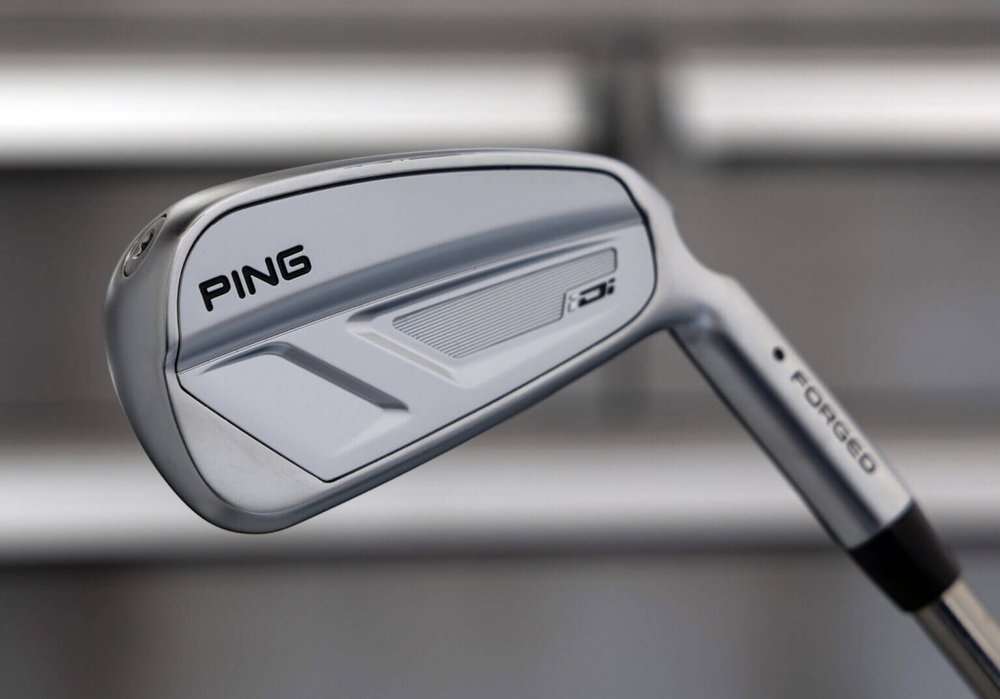
PING iDi Driving Iron Review
Three flights, one shape: the driving iron done properly
Excellent
Tour Issue Score 9.1 · Ranked #6 of 67 in Irons
Best for: Better players with speed who want a controllable tee club and long iron replacement
The Bottom Line
Three flights, one shape: the driving iron done properly. The PING iDi Driving Iron scores 9.1 out of 10 in our research-based review, a excellent mark that puts it at #6 of 67 Irons in our rankings. Its strongest fit: Better players with speed who want a controllable tee club and long iron replacement.
Full Review
The Short Version
The PING iDi replaces the iCrossover as PING dedicated driving iron, and it is three clubs in one family. The 2 iron at 17 degrees is a low launch, low spin tee club, the 3 iron at 20 degrees splits the difference, and the 4 iron at 23 degrees launches higher with more spin to hold greens as a true long iron replacement. A forged maraging steel face, a reshaped 17-4 stainless head and a new internal air pocket for sound make it the most complete utility iron PING has built.
Performance
Ball speed is the headline in independent testing. Golf Monthly reported being blown away by the 2 iron, with carries starting around 249 yards off the floor and a best effort pitching just short of 260 yards and rolling to 282, while launch and spin stayed consistent within about 1 degree and 400 rpm. Plugged In Golf found the 17 degree head easy to elevate from the turf for a driving iron, with center strikes keeping pace with most hybrids and mishits holding speed and direction. Published testing of the 4 iron against a PING i230 4 iron found noticeably higher launch, more than 300 rpm of added spin and a steeper landing angle, which is exactly the trade a long iron replacement should make.
Forgiveness
PING made the head deeper front to back and shallower, which it credits for 15 percent higher MOI on high and low impacts, and testers felt that help low on the face, where driving irons usually die. Plugged In Golf highlighted how a low center of gravity lifts thin strikes instead of letting them run along the ground. Forgiveness has limits, and honesty matters here: the flat face does not straighten a wild swing the way a hybrid face can, the blade length is five percent shorter than the iCrossover for workability, and golfers without speed should pick the 4 iron or a hybrid instead of forcing the 2 iron.
Feel and Sound
Feel is the iDi biggest step forward. The InR-Air technology is a pocket of air behind the face that damps unwanted frequencies, supported by an internal i-Beam structure. Golf Monthly called the result superb, hot and springy without harshness, with feedback on mishits that informs without punishing dispersion. Plugged In Golf described a crisp snap, a clear improvement in character over earlier Crossover models even at similar volume. For a hollow utility iron, the sensation is unusually iron like, which is precisely what its target player wants.
Value
The US MSRP is $295 per club in steel or graphite, with street prices commonly near $270, so the iDi sits at the premium end of the utility category next to rivals like the Titleist U505. The value case is versatility: one club that works as a fairway finder off the tee and a playable long iron from the turf, offered in three genuinely different flights rather than three lofts of the same club, plus fitting through all 10 PING color codes on a fixed hosel. Cheaper options exist, including the outgoing iCrossover, but they give back the feel and flight tuning.
Who Should Buy It
Buy the iDi if you have the speed to launch a long iron, play firm or windy golf where a hybrid balloons, and want one top of bag club you can flight down on demand. Choose the loft by job, not ego: 17 degrees for tee duty, 20 degrees for a blend, 23 degrees if the club must hold greens. Skip it if your driver speed is modest, if you need help getting the ball airborne, or if a hybrid versatility from rough and uneven lies matters more than tee control.
Verdict
The iDi takes a winning formula and fixes its weakest parts: it sounds and feels like an iron, flies in three distinct windows, and protects ball speed better than its predecessor. Golf Monthly put it close to the top of its favorite utility irons immediately, and the published evidence supports that verdict. It is the driving iron to beat for 2026. This is a research-based review synthesized from published reviews, independent test data, and manufacturer specifications; no personal testing was conducted.
What We Like
- Three lofts individually tuned for flight: 17 degree low launch, 20 degree mid, 23 degree higher launch with more spin
- Forged C300 maraging steel face and 15 percent higher MOI on high and low strikes than iCrossover, per PING
- InR-Air internal air pocket praised by Golf Monthly and Plugged In Golf for a crisp, refined sound and feel
- Golf Monthly testing recorded outstanding ball speed and launch and spin consistency within tight windows
- Improved sole with more bounce, rounded leading edge and added camber for turf play, not just tee shots
What to Consider
- Still a better player tool: slower swing speeds will struggle to launch the 17 degree 2 iron
- Fixed hosel removes the adjustable hosel versatility of the older iCrossover
- Trailing edge visible behind the topline at address in the lower lofts, noted by Golf Monthly
- Premium single club pricing at a $295 MSRP, with street prices near $270
Specifications
| Construction | 17-4 stainless steel head, forged C300 maraging steel face, InR-Air sound damping pocket and i-Beam structure |
|---|---|
| Lofts | 2 iron 17 degrees (39.75 in), 3 iron 20 degrees (39.25 in), 4 iron 23 degrees (38.75 in) |
| Key Tech | Loft specific launch and spin tuning, 15 percent higher MOI on high and low strikes, fixed hosel fits all 10 PING color codes |
| Stock Shaft and Grip | PING Tour 2.0 Chrome 85 graphite (ALTA CB Blue, Tour 2.0 Black, Tensei 1K Black and Denali Red options), Golf Pride 360 Tour Velvet |
Score Breakdown
Scores are research-based, drawn from manufacturer specs, tour adoption, and published independent test data. How we score