Wilson · Irons Review
Wilson DYNAPWR Irons (2025) Review
The distance first DYNAPWR: cup face speed and high launch in a cleaner, smaller head than the Max
Very Good
Tour Issue Score 8.5 · Ranked #60 of 67 in Irons
Best for: Mid-handicap golfers who want maximum iron distance and high launch in a smaller, cleaner package than a super game-improvement iron
The Bottom Line
The distance first DYNAPWR: cup face speed and high launch in a cleaner, smaller head than the Max. The Wilson DYNAPWR Irons (2025) scores 8.5 out of 10 in our research-based review, a very good mark that puts it at #60 of 67 Irons in our rankings. Its strongest fit: Mid-handicap golfers who want maximum iron distance and high launch in a smaller, cleaner package than a super game-improvement iron.
Full Review
The Short Version
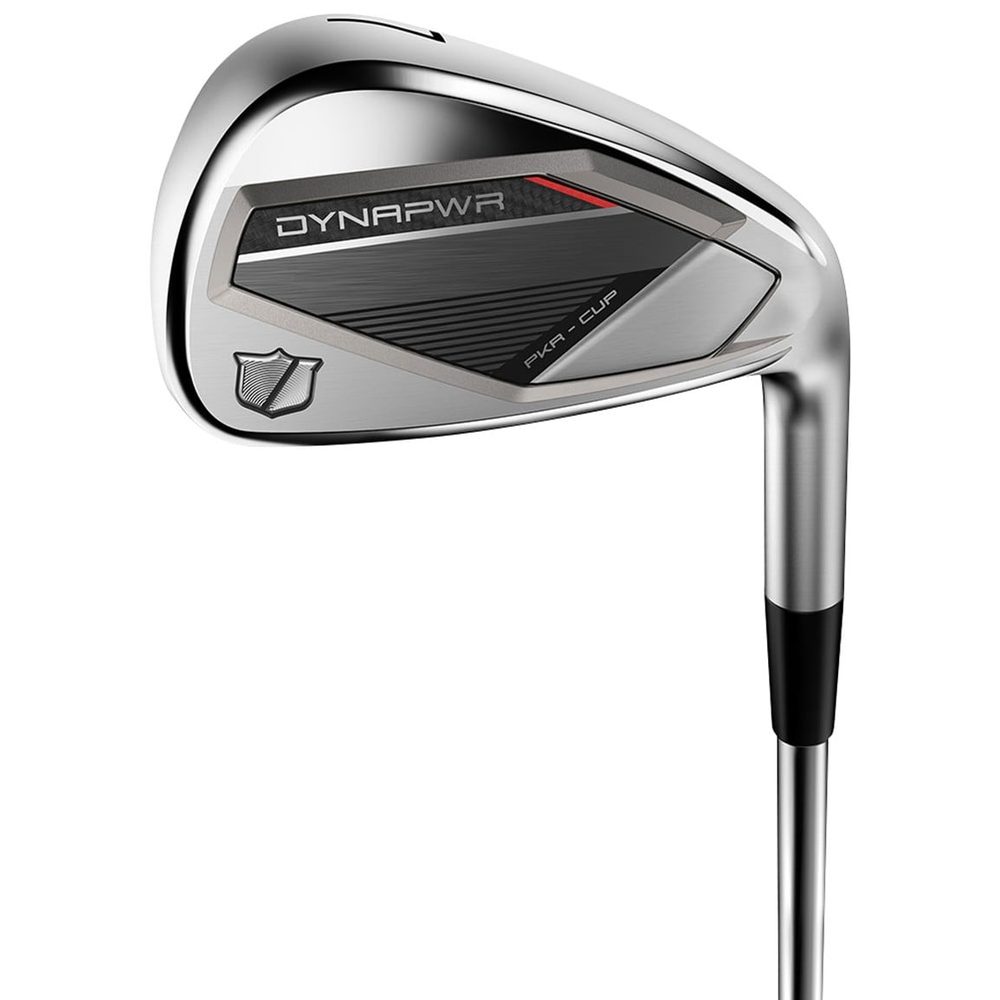
The standard 2025 Wilson DYNAPWR is the distance first game-improvement iron in Wilson's refreshed family, sitting between the larger, higher launching DYNAPWR Max and the forged player model. It pairs a hollow body head with a PKR-Cup face, a Velocity Optimization Channel, and an Energy Transfer Chassis, all in a slightly smaller, less offset package than the Max. Published testing consistently describes the same club: very long, high launching, and more consistent on mishits than its price suggests.
Performance
Distance is the headline, and the engineering is built around face flex. The PKR-Cup face wraps around the sole perimeter and uses Wilson's AI generated variable face thickness to keep ball speed up across a wider area, while the channel behind the face lets it flex more at impact, especially on the low strikes its target player hits most. National Club Golfer recorded a 129.4 mph average ball speed and a 185 yard carry with the 7-iron in its 2025 testing, numbers it called outrageous for the category. Plugged In Golf found the long irons notably fast and the short irons unusually consistent in ball speed, and Golf.com's player testers reported easy distance gains with a high, playable flight. The lofts are very strong, with a 28 degree 7-iron and a 19 degree 4-iron, so some of the yardage is loft driven, but the low center of gravity keeps launch high enough for shots to land steeply and stop.
Forgiveness
The hollow body construction moves weight low and toward the toe, which raises stability and helps toe side misses, the most common amateur strike, hold their speed and line. Reviewers of the 2025 family credit the standard model with tight dispersion and small carry losses on off-center hits, and its profile is a practical middle ground: more help than a player iron, less bulk and offset than the Max. The honest limit is the long irons. Published reviews warn that the strong lofted 4-iron needs real club speed and natural launch to be useful, and most buyers will be better served by the 5-iron as the longest iron plus a hybrid.
Feel and Sound
For a cast distance iron, the feedback is better than expected. The two bar Energy Transfer Chassis is designed to stabilize the head and reduce vibration, and Wilson's topology optimization work tunes material distribution for sound. Golf.com testers called the impact feel the softest in their session and described the club as easy to swing without feeling tiring, while other published reviews note a surprisingly traditional, muted sound. It is still a cast hollow body, so strike feedback is less precise than the forged DYNAPWR, and golfers who shape shots and diagnose contact by feel will notice the difference.
Value
At $899 for a steel set, and $999 in graphite, the standard DYNAPWR undercuts headline game-improvement sets from the largest brands by several hundred dollars while offering current generation cup face technology and a full 4-iron through gap wedge range. Today's Golfer rated the iron four stars and highlighted the launch it produces despite the strong lofts. The value caveats are familiar Wilson ones: resale values tend to trail the biggest names, and the strong lofts make a basic gapping session worthwhile so the set blends into your wedges and hybrids.
Who Should Buy It
Buy the standard DYNAPWR if you are a mid-handicap golfer who wants more iron distance and height, mishit protection, and a head that still looks reasonably compact at address. It suits players who found the Max too large or too high launching and who do not need a forged feel. Skip it if you already launch the ball very high, if you work the ball deliberately, or if precise forged feedback matters more to you than yardage, in which case the DYNAPWR Forged in the same family is the better Wilson answer.
Verdict
The standard DYNAPWR is the sweet spot of Wilson's 2025 iron family: near Max level ball speed and forgiveness in a cleaner shape, with high launch that makes its strong lofts playable and a price that embarrasses bigger brands. Get the gapping checked, consider dropping the 4-iron for a hybrid, and it is one of the strongest distance iron buys of 2025. This is a research-based review synthesized from published reviews, independent test data, and manufacturer specifications; no personal testing was conducted.
What We Like
- PKR-Cup face with AI generated variable face thickness keeps ball speed high across the face, including low and toe side strikes
- Published testing credits the standard DYNAPWR with exceptional distance, including a 185 yard average 7-iron carry in National Club Golfer testing
- Hollow body construction with low, toe biased weighting launches the ball high despite strong lofts, so shots hold greens
- Golf.com player testers praised the soft impact feel and consistent numbers through the set
- At $899 in steel it undercuts most big name game-improvement sets by several hundred dollars
What to Consider
- Very strong lofts, including a 28 degree 7-iron, demand a gapping check at the top and bottom of the set
- Cast hollow body feel is muted compared with the forged DYNAPWR and other forged player irons
- The 19 degree 4-iron will be hard to launch for all but faster, higher launching swingers, per published reviews
- Head shape reads game improvement at address, which better players may find busy
Specifications
| Construction | Hollow body game-improvement head with PKR-Cup face and Energy Transfer Chassis |
|---|---|
| Key Tech | AI generated variable face thickness, Velocity Optimization Channel, low and toe biased weighting for high launch and MOI |
| Lofts | 4-iron 19 degrees, 7-iron 28 degrees, pitching wedge 42.5 degrees, gap wedge 48 degrees |
| Set Configuration | 4-iron through gap wedge available; common retail sets 5-PW or 5-PW plus GW, right and left hand |
| Shafts and Grip | KBS Max Ultralight steel, UST Recoil Dart graphite option, Lamkin Crossline 360 grip |
Score Breakdown
Scores are research-based, drawn from manufacturer specs, tour adoption, and published independent test data. How we score