
Top Flite · Golf Balls Review
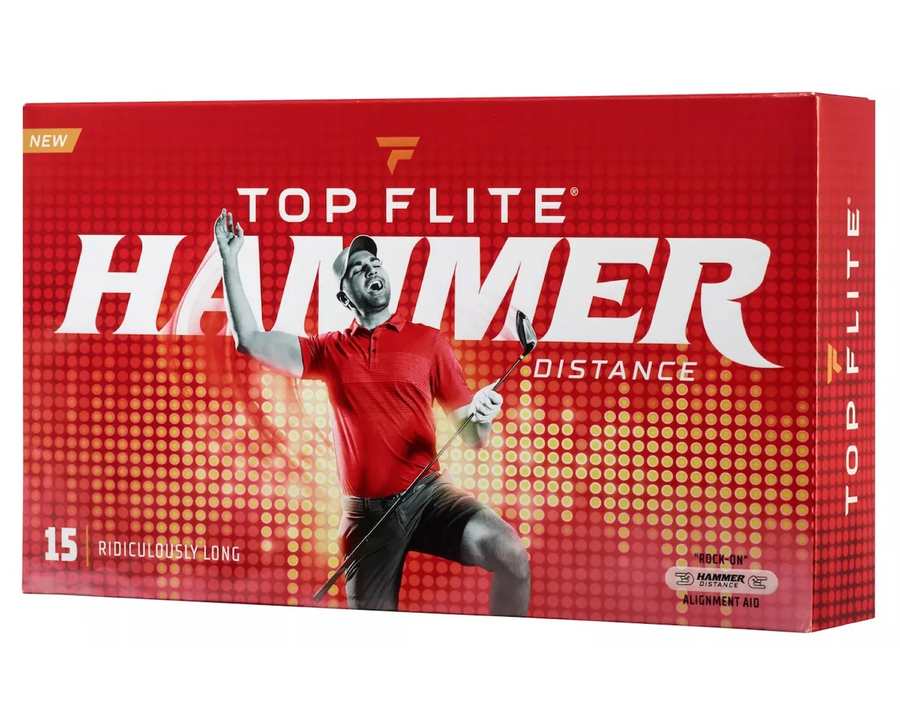
Top Flite Hammer Distance Golf Balls Review
A distance ball that does not deliver a distance advantage
Below Average
Tour Issue Score 6.0 · Ranked #67 of 76 in Golf Balls
Best for: Very price driven beginners at Dick's Sporting Goods who play run up shots; distance seekers and most other golfers should avoid it
The Bottom Line
A distance ball that does not deliver a distance advantage. The Top Flite Hammer Distance Golf Balls scores 6.0 out of 10 in our research-based review, a below average mark that puts it at #67 of 76 Golf Balls in our rankings. Its strongest fit: Very price driven beginners at Dick's Sporting Goods who play run up shots; distance seekers and most other golfers should avoid it.
Full Review
The Short Version
The Top Flite Hammer Distance is a Dick's Sporting Goods house brand ball sold in 15 packs for about twenty five dollars, with one job in its name: distance. The most useful published evidence, head to head play reported in the GolfWRX forums, undercuts that job directly. A tester who played the distance model reported well struck drives left him wanting more, and found the ball shorter than a Pinnacle Rush or even a Nitro. Add a firm, often unpleasant feel in user reports, minimal greenside check from its ionomer cover, and a sibling in the same line, the Hammer Control, that reviewers generally regard more highly, and the Hammer Distance becomes hard to recommend even at a budget price.
Performance
Top Flite builds the Hammer Distance around a large, high speed core and an ionomer cover with Dimple in Dimple aerodynamics, a pattern intended to sustain spin and lift later in flight for extra carry. On paper that is a sensible distance recipe for slow to moderate swing speeds. In head to head play, however, the published GolfWRX account found no distance advantage to show for it, with the ball finishing shorter than direct budget rivals and, in another forum report, a spare tour ball in the same bag carried a solid ten yards farther. Forum reports are individual accounts, not robot data, and this review weights them that way. Still, when a distance ball has no independent test win to point to and its clearest head to head reports are negative, the headline claim is unsupported. Around the green the ionomer cover produces the expected result for the class: low check, longer rollout, and approach shots that land hot and release through rather than sitting down.
Forgiveness
The Hammer Distance does offer the standard forgiveness benefits of a low spin, two piece distance ball. Reduced driver spin means a slice or hook bends less, the high launch design helps slower swingers get the ball airborne, and a durable cover survives trees, cart paths, and thin bunker contact without cutting easily. For a beginner whose main goal is keeping a tee shot in play at low cost, those traits have some value. The limits are just as clear. The ball cannot create distance a swing did not produce, and the forum evidence suggests it may actually give a little back compared with rivals. Its forgiveness also stops at the green, where minimal check turns a decent approach into a long putt. The Hammer Control, sold alongside it, was described by multiple GolfWRX posters as checking better, feeling softer, and performing more completely for similar money, which makes the Distance model the less forgiving choice inside its own family where it matters most, on scoring shots.
Feel and Sound
Feel reports for Top Flite distance balls in this generation lean firm, and the Hammer line is no exception outside the softer Control variant. GolfWRX posters contrasted the Hammer Control, which they could identify by a softer cover in hand, with the harder non feel versions they liked less, and budget ball roundups routinely describe the Distance model as crisp to harsh off wedges and the putter. That firmness gives clear feedback on a mishit, which some beginners appreciate, but it also makes distance control on chips and putts harder to learn, because the ball comes off the face hot with little grip. The sound off the putter is a distinct click rather than a soft tap. Players who prefer a firm ball will tolerate it. Players shopping for touch around the green will not find it here, and the marketing language about softer feel and improved durability should be read as relative to older Top Flite distance balls, not to the modern soft budget class.
Value
At about $25 for 15 balls, the Hammer Distance is not expensive, and frequent Dick's promotions can push the effective price lower, sometimes toward two packs for thirty dollars in the reports around the sibling Control model. Cheap, however, is not the same as good value when the core promise fails. A distance ball that is not demonstrably long competes purely on price, and on price it faces the Pinnacle Rush, which has measured test winning iron distance behind it, the Maxfli Tour, which brings genuine urethane performance at a higher but still moderate price, and the Srixon Soft Feel, which is softer and more complete for similar money, all reviewed on this site. Durability helps the value case a little, since a tough ionomer cover lasts, but durability in a ball you do not enjoy playing is a weak selling point. The value score reflects a low price attached to an unproven headline claim.
Who Should Buy It
Avoid the Hammer Distance if you are buying it for extra yards, if greenside control matters to your scoring, or if you dislike a firm feel. That covers most golfers. The narrow remaining case is a very price driven beginner who shops at Dick's, loses balls often, plays mainly run up approaches, and finds the ball on a deep promotion. Even then, look first at the Hammer Control in the same display, which forum testers consistently preferred for its softer cover and better manners around the green, or step to the Pinnacle Rush for a budget distance ball with actual measured length, the Srixon Soft Feel for soft feel and easy launch, or the Maxfli Tour for real tour style spin at a value price, all already reviewed on this site.
Verdict
The Hammer Distance fails on the one claim it is named for. Published head to head play found it shorter than cheaper and better known rivals, its ionomer cover gives minimal greenside check, and its own sibling is the better regarded ball in the line. A low price and a tough cover keep it from the bottom of the scale, but they do not make it a recommendation. This is a research-based review synthesized from published reviews, independent test data, and manufacturer specifications; no personal testing was conducted.
What We Like
- Low price for a 15 pack, with frequent Dick's Sporting Goods promotions lowering it further
- Durable ionomer cover resists cuts and holds up over many casual rounds
- High launch Dimple in Dimple design helps slow to moderate swing speeds get the ball airborne
- Low driver spin reduces slice and hook curvature for developing players
What to Consider
- Headline distance promise disappoints in head to head GolfWRX play, reported shorter than a Pinnacle Rush or a Nitro
- Firm, often unpleasant feel off wedges and the putter compared with modern soft budget balls
- Ionomer cover produces minimal greenside check, so approaches and chips release and run
- Hammer Control sibling in the same line is generally better regarded for feel and short game play at similar money
- No independent test win supports the maximum distance claim in the name
Specifications
| Construction | 2-piece |
|---|---|
| Cover | Ionomer with Dimple in Dimple aerodynamics |
| Core | Large, high speed core |
| Flight | High launch, low spin distance flight |
| Pack | 15 balls |
| Retailer | Dick's Sporting Goods house brand |
Score Breakdown
Scores are research-based, drawn from manufacturer specs, tour adoption, and published independent test data. How we score
More Balls Reviews
All Balls →
Titleist
Titleist Pro V1x Golf Balls (2025)
Callaway
Callaway Chrome Tour X Golf Balls
Titleist
Titleist Pro V1 Golf Balls (2025)
Callaway
Callaway Chrome Tour Triple Diamond Golf Balls
Srixon
Srixon Z-Star Diamond Golf Balls
Maxfli
Maxfli Tour X Golf Balls
Srixon
Srixon Z-STAR XV DIVIDE Golf Balls
TaylorMade