
Srixon · Golf Balls Review
Srixon UltiSoft Golf Balls Review
Srixon's softest ball, and the second shortest in the 2025 robot test
Below Average
Tour Issue Score 6.2 · Ranked #64 of 76 in Golf Balls
Best for: Slow swing golfers who rank soft putter feel above distance; distance seekers should avoid it
The Bottom Line
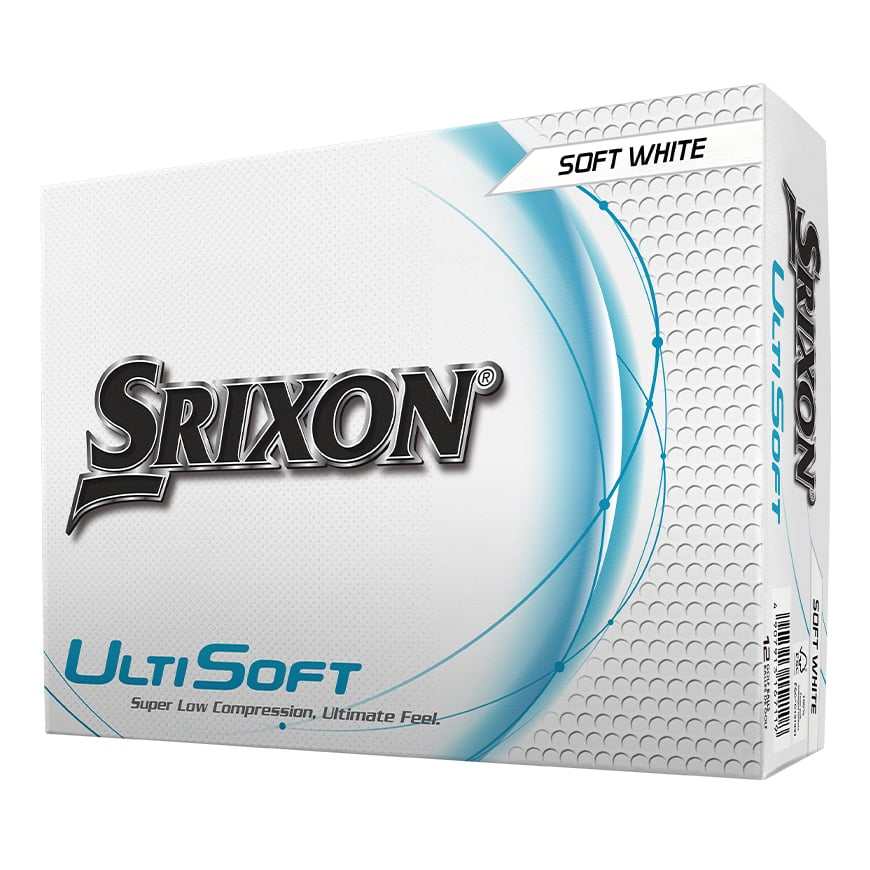
Srixon's softest ball, and the second shortest in the 2025 robot test. The Srixon UltiSoft Golf Balls scores 6.2 out of 10 in our research-based review, a below average mark that puts it at #64 of 76 Golf Balls in our rankings. Its strongest fit: Slow swing golfers who rank soft putter feel above distance; distance seekers should avoid it.
Full Review
The Short Version
The Srixon UltiSoft is Srixon's softest ball: a two piece design with a FastLayer Core that is soft in the center and firmer at the edge, a soft, thin ionomer cover, a 338 Speed Dimple pattern, and a manufacturer compression of 42. The feel is excellent and the price is low. The performance, measured independently, is close to the bottom of the market. In the Today's Golfer 2025 robot test of 62 balls, the UltiSoft was the second shortest ball off the driver at all three swing speeds and ranked in the bottom five for wedge backspin, a result Today's Golfer summarized directly: the softest balls in the test were the shortest with the driver and the lowest spinning with a wedge.
Performance
The carry numbers leave little room for interpretation. At 78 mph the UltiSoft carried 157.8 yards, second shortest of 62. At 93 mph it carried 201.9 yards, second shortest again. At 114 mph it carried 262.7 yards, second shortest again, ahead of only the Pinnacle Soft each time. Today's Golfer measured its compression at 36, the second softest in the test, and noted that it did not deliver standout iron distance either, rating mid to bottom with below average spin. The Club Stand's review summary put its average placing across the robot test scoring areas at 56, tied for second worst overall. Golf Monthly's earlier on course review of the previous generation found the same shape of result in human hands: superb feel, with pitch shots releasing noticeably more than a urethane ball.
Forgiveness
There is a real, if narrow, forgiveness case. The low compression core is effortless to compress, the flight is high and generally straight, and Golf Australia's comparative testing found the UltiSoft accurate, with its extra height helping short iron shots stop despite carrying slightly less than the Srixon Soft Feel. Low driver spin limits curvature. The catch is that the ball forgives direction while taxing distance on every single tee shot, including the well struck ones, and its higher flight was the weaker of the two Srixon soft balls in the wind in that same comparative test.
Feel and Sound
Feel is the UltiSoft's one elite trait. Reviewers consistently single it out: Golf Monthly called the feel off the putter and on chips silky soft, and the soft, thin cover gives a gentle, responsive strike on short shots. If a ball were chosen on putter feel alone, this one would be hard to beat at its price. The trade off is the same as with every ultra low compression ball: strike feedback is muted, and the ionomer cover cannot match urethane for greenside grab.
Value
At $22.99 per dozen the UltiSoft undercuts most name brand soft balls, and its cover durability is well regarded in published reviews. It still scores modestly on value because the Srixon Soft Feel in our catalog sits in the same price neighborhood, feels nearly as soft, and performed far better in independent testing, flying longer and handling wind better. Paying similar money for the second shortest ball in a 62 ball test is hard to defend unless feel is your only criterion.
Who Should Avoid It, and What to Buy Instead
Avoid the UltiSoft if you need driver distance at any swing speed, if you play exposed, windy courses, or if your short game depends on pitch shots checking and holding. Faster swingers should avoid it outright. The better alternative for most soft ball shoppers is the Srixon Soft Feel reviewed in our catalog: same brand, similar soft character, stronger test results. Golfers who want soft feel with approach shot control should step up to the TaylorMade Tour Response in our catalog. The UltiSoft remains a reasonable pick only for slow swing golfers who rank putter feel first and accept giving up measurable yards.
Verdict
The UltiSoft delivers exactly the softness its name promises and quietly gives back distance on every drive to get it. Second shortest at all three speeds and bottom five for wedge spin in the Today's Golfer 2025 robot test is a documented pattern, not an opinion. Feel first golfers may still enjoy it, but most golfers will score better with the Soft Feel. This is a research-based review synthesized from published reviews, independent test data, and manufacturer specifications; no personal testing was conducted.
What We Like
- Softest feel in the Srixon lineup, praised consistently for putting and chipping
- Low compression FastLayer Core is effortless to compress at slow speeds
- High, generally straight flight with low driver spin
- Soft, thin cover is durable and resists scuffs well in published reviews
- Low $22.99 per dozen price for a name brand soft ball
What to Consider
- Second shortest driver carry at all three swing speeds in the Today's Golfer 2025 robot test
- Bottom five for wedge backspin in the same 62 ball robot test
- Mid to bottom iron distance with below average spin in robot testing
- Higher flight is vulnerable in wind compared with the Srixon Soft Feel
- Ionomer cover releases pitch shots noticeably more than urethane alternatives
Specifications
| Construction | 2-piece with FastLayer Core, soft center to firmer outer edge |
|---|---|
| Compression | 42 manufacturer rating, lowest in the Srixon lineup; 36 in Today's Golfer robot test measurement |
| Cover | Soft, thin ionomer cover, 1.45 mm |
| Dimples | 338 Speed Dimple pattern |
| Options | Soft White and Tour Yellow |
Score Breakdown
Scores are research-based, drawn from manufacturer specs, tour adoption, and published independent test data. How we score
More Balls Reviews
All Balls →
Titleist
Titleist Pro V1x Golf Balls (2025)
Callaway
Callaway Chrome Tour X Golf Balls
Titleist
Titleist Pro V1 Golf Balls (2025)
Callaway
Callaway Chrome Tour Triple Diamond Golf Balls
Srixon
Srixon Z-Star Diamond Golf Balls
Maxfli
Maxfli Tour X Golf Balls
Srixon
Srixon Z-STAR XV DIVIDE Golf Balls
TaylorMade