Mizuno · Irons Review
Mizuno Pro 243 Irons Review
Tour Speed forged cavity, compact, fast, unmistakably Mizuno.
Excellent
Tour Issue Score 8.9 · Ranked #22 of 67 in Irons
Best for: Low to mid-handicap ball strikers who want a compact, workable players cavity with more speed and forgiveness than a pure blade.
The Bottom Line
Tour Speed forged cavity, compact, fast, unmistakably Mizuno.. The Mizuno Pro 243 Irons scores 8.9 out of 10 in our research-based review, a excellent mark that puts it at #22 of 67 Irons in our rankings. Its strongest fit: Low to mid-handicap ball strikers who want a compact, workable players cavity with more speed and forgiveness than a pure blade..
Full Review
The Short Version
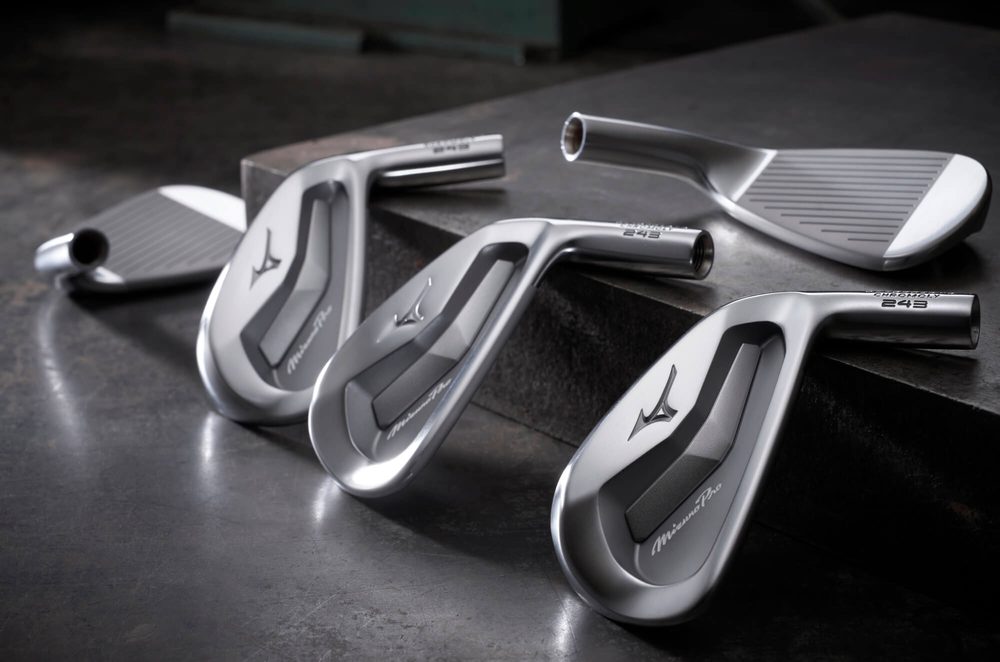
The Mizuno Pro 243 is the Tour Speed model in Mizuno's Pro family: a compact players cavity-back that tries to add genuine ball speed without giving up the forged feel the brand is known for. Grain Flow Forged HD in Hiroshima, Japan, the long and mid irons (4-7) use 4120 Chromoly with a wider and longer Flow Microslot, while the scoring irons (8-GW) switch to 1025E Pure Select Mild Carbon Steel for control. A soft copper underlay, Harmonic Impact Technology and a wrap-around sole grind complete a design that Golf Digest placed on its 2024 Hot List and that GOLF.com coverage notes has since been succeeded in spirit by the Pro M-13 in the Modern series. Published reviews consistently praise the feel, flight and workability, and just as consistently note that this is a players iron first, help is present, but it is not a game-improvement club.
Performance
Performance is built around the split construction. In the 4- through 7-irons, the Chromoly head allows a face as thin as about 2.1 millimeters in the long irons, and the Flow Microslot is wider and deeper than before to expand the high-energy area of the face. Reviewers describe long and mid irons that fly noticeably farther than the model's predecessor despite a smaller head, with a mid-high, penetrating flight that better players can still flight down. Mizuno strengthened the scoring-iron lofts to keep gapping even as the long irons got faster, the 7-iron sits at 32 degrees and the pitching wedge at 44 degrees in published spec tables, so distance consistency through the set, rather than raw yardage in one club, is the real story. Workability remains a strength: testers in published reviews report holding, drawing and fading the ball on command, with trajectory control that suits golfers who play shots rather than simply launching the ball straight.
Forgiveness
Forgiveness is relative here, and every published review frames it that way. For a head this compact, with a dramatically reduced topline and blade length versus the previous generation, the 243 retains speed surprisingly well on modest mishits, and Golf Digest testers called it forgiving for its class. The Microslot long irons are the most helpful part of the set, preserving ball speed higher on the face and toward the toe than a traditional cavity of this size would. That said, there is a clear penalty for poor contact: independent reviewers note meaningful distance loss when the sweet spot is missed, and there is no perimeter-weighted safety net for heel and high-face strikes. Golfers moving down from a game-improvement iron should expect a learning curve; golfers moving across from other players cavities will find the 243 at least as forgiving as its peers, and more forgiving than the Pro 241 blade below it in the family.
Feel and Sound
Feel is the reason most golfers shortlist a Mizuno, and published testing puts the 243 near the top of its class, Golf Digest's Hot List sensory voting ranked it among the top players irons for sound and feel. The soft copper underlay beneath the nickel chrome finish, a detail carried across the Pro line, is credited with lengthening and softening the impact sensation, while Harmonic Impact Technology tunes head geometry to match the vibration patterns Mizuno associates with a soft muscle-back strike. Reviewers describe center hits as soft, solid and quiet, with no harshness even in the Chromoly long irons, and enough feedback to locate the strike without a stinging penalty. The full satin brush finish keeps glare down at address, reinforcing the traditional, confidence-inspiring presentation better players prefer.
Value
At $200 per iron, roughly $1,400 for a 4-PW set, the Pro 243 is priced squarely against other flagship forged players irons, neither a bargain nor an outlier. The value case is manufacturing: single-billet Grain Flow Forging at Mizuno's long-standing Hiroshima plant, two distinct head materials in one set, and a copper underlay are expensive processes that cheaper cast competitors do not match. Against that, the right-hand-only availability limits the audience, resale and fitting flexibility depend on getting the build right up front, and golfers who do not prioritize feel can find similar ball speeds for less. For the target player, the price is defensible; for everyone else, it is a premium paid for qualities they may not use.
Who Should Buy It
Buy the Pro 243 if you are a low to mid-handicapper who strikes the center often enough to enjoy a compact head, wants more speed and a touch more help than a blade offers, and values soft forged feel above almost everything else. It also makes an excellent mid and long-iron component in a combo set with Pro 241 scoring irons, a configuration tour and elite amateur players commonly use. High-handicappers, golfers who need launch assistance, and left-handers should look to the Pro 245 concept or Mizuno's JPX line instead. A proper fitting matters, stock steel options and lofts should be checked against your wedge gapping before ordering.
Verdict
The Mizuno Pro 243 advances its predecessor more than any other model in its generation: smaller and cleaner at address, faster from a thinner Chromoly face in the long irons, and still unmistakably a Mizuno in feel thanks to Grain Flow Forging, the copper underlay and Harmonic Impact tuning. It asks for a good swing and pays it back with flight control, consistency and one of the best impact sensations in the players-iron class. This is a research-based review synthesized from published reviews, independent test data, and manufacturer specifications; no personal testing was conducted.
What We Like
- Grain Flow Forged HD in Hiroshima with soft copper underlay for the signature soft Mizuno feel
- 4120 Chromoly with wider, longer Flow Microslot in the 4-7 irons for faster ball speeds in a compact head
- Harmonic Impact Technology tuned to match soft muscle-back vibration patterns
- Wrap Around Sole Grind and increased bounce for cleaner turf interaction through the set
- Dramatically reduced topline and blade length versus its predecessor for a true players look at address
- 1025E Pure Select Mild Carbon Steel scoring irons (8-GW) for control where it matters most
What to Consider
- Right-hand only in the standard 4-GW set, with no left-hand option at launch
- Compact players profile punishes mishits more than larger cavity backs, distance drops noticeably off-center
- Premium $200-per-iron pricing puts a full set in flagship territory
- Modernized, stronger scoring-iron lofts require careful gapping checks at the wedge end
- Less launch and forgiveness help than the Pro 245 for golfers who need it
Specifications
| Construction | Grain Flow Forged HD; 4120 Chromoly with Flow Microslot (4-7), 1025E Pure Select Mild Carbon Steel (8-GW) |
|---|---|
| Finish / Feel Tech | Full Satin Brush finish; soft copper underlay; Harmonic Impact Technology |
| Lofts | 4-iron 22 degrees, 7-iron 32 degrees, PW 44 degrees, GW 48 degrees |
| Set Makeup | 4-GW, right-hand only; Nippon N.S. PRO Modus3 Tour 120 listed among stock steel options |
| Sole Design | Wrap Around Sole Grind with increased bounce (about +1 degree long irons, +2 degrees scoring irons) |
Score Breakdown
Scores are research-based, drawn from manufacturer specs, tour adoption, and published independent test data. How we score