Cobra · Irons Review
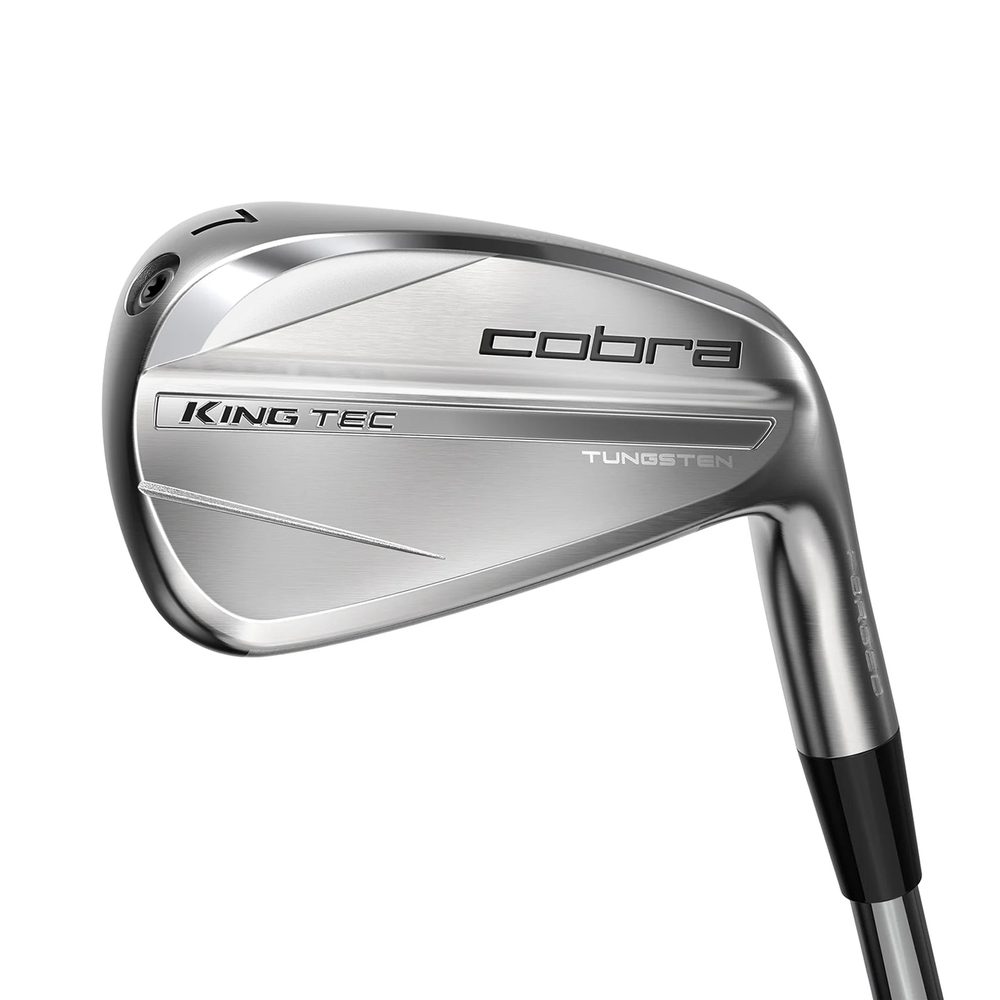
Cobra King Tec Irons (2025) Review
Blade looks, forged feel and distance-iron speed that still holds greens
Excellent
Tour Issue Score 8.9 · Ranked #20 of 67 in Irons
Best for: Low-to-mid handicappers (roughly 0-12) who want players looks with distance-iron speed and scoring-iron control
The Bottom Line
Blade looks, forged feel and distance-iron speed that still holds greens. The Cobra King Tec Irons (2025) scores 8.9 out of 10 in our research-based review, a excellent mark that puts it at #20 of 67 Irons in our rankings. Its strongest fit: Low-to-mid handicappers (roughly 0-12) who want players looks with distance-iron speed and scoring-iron control.
Full Review
The Short Version
The 2025 Cobra King Tec is Cobra's fifth-generation answer to a familiar brief: give a good ball-striker an iron that looks like a blade, feels like a forging and flies like a distance iron. The recipe is a hollow body precision-forged five times from 1025 carbon steel, a thin forged PWRSHELL face, AI-informed H.O.T. face geometry and tungsten placed only where it helps, the long and mid irons. Golf Digest recognised the model on its 2025 Hot List, and independent reviews have consistently highlighted the same surprise: for a strongly lofted players-distance set, it keeps enough spin to hold greens. That balance, more than any single technology, is why the King Tec belongs on the shortlist in this category.
Performance
The performance story starts at the face. The PWRSHELL insert is forged, thinner and more robust than before, and its H.O.T. variable-thickness pattern is designed to preserve ball speed away from the centre, effectively widening the useful hitting area. Strong lofts, 29.5 degrees in the 7-iron and 44 degrees in the pitching wedge, do the rest of the distance work, and published on-course reviews report roughly a club of extra carry over traditional-lofted sets for the testers involved. More notable is what happens at the green: reviewers recording launch-monitor numbers found iron spin remaining healthy rather than collapsing into the low, knuckling flight that plagues some rivals, so approach shots stop instead of releasing through. Cobra supports the long irons with 20 grams of tungsten low in the head for launch and stability, then removes it from the 8-iron down so scoring clubs fly flatter and more predictably.
Forgiveness
Forgiveness is relative in a compact head, and the King Tec is honest about its audience. Within the players-distance class, however, it is generous: the hollow construction and lighter, softer internal foam allow face flex and perimeter stability that a solid blade cannot offer, and the toe-side tungsten resists twisting on the common toe miss. Independent review coverage describes mishits still finding greens more often than expected from the iron's size, particularly in the tungsten-assisted 4- through 7-irons. The limits show up for golfers who need launch help on every swing, the head is smaller, the offset minimal and the sole narrower than in the King Tec X or a true game-improvement iron. A 15-handicapper with inconsistent contact will score better with the X; a 7-handicapper will find the standard Tec forgiving enough on all but the worst strikes.
Feel and Sound
Feel is where Cobra spent its extra forging step. Most forged irons go through four strikes; Cobra adds a fifth at high pressure and temperature to tighten the grain structure of the 1025 carbon steel, a process the company links directly to the soft, solid strike better players describe. The hollow body is filled with a revised foam that is lighter and softer than before, intended to tune sound down from hollow and metallic toward dense and forged while still returning feedback about strike location. Reviewers comparing generations note the current model sounds and feels closer to a forged cavity than to earlier hollow distance irons. It remains a distance iron at impact, there is a sense of speed off the face, but mishits are communicated clearly enough for practice to be useful, which is exactly the feedback loop its target player wants.
Value
At $1,299 for a seven-piece steel set the King Tec is priced squarely with the forged players-distance establishment from Callaway, Srixon, TaylorMade and Ping, and street pricing below that figure has appeared at major retailers. There is no discount angle, so value rests on versatility: one set that covers the distance chaser moving down in handicap and the low handicapper who wants help in the long irons without surrendering short-iron control. Stock build quality helps the case, with KBS $-Taper Lite steel shafts and Lamkin Crossline grips that most players can use unchanged. Budget hunters should note the Tec X offers similar money with more forgiveness; feel-first players, though, get their money's worth here.
Who Should Buy It
Buy the King Tec if you are roughly a 0-to-12 handicap, strike your irons consistently enough to enjoy a compact head, want extra distance without giving up green-holding spin, and value forged feel enough to pay for it. It is an especially good step for former blade or cavity-back players whose long irons have started to cost them shots. Steer to the King Tec X or a game-improvement set if you need maximum launch and stability, prefer visible offset for confidence, or are still developing a repeatable strike, the standard Tec will expose, not hide, those gaps.
Verdict
The King Tec succeeds because it refuses the usual compromise: it is fast without being wild, compact without being cruel and forged-feeling without being fragile on mishits. In a crowded players-distance field that combination, backed by Hot List recognition and consistently positive independent reviews, makes it one of the safest premium recommendations of its generation. This is a research-based review synthesized from published reviews, independent test data, and manufacturer specifications; no personal testing was conducted.
What We Like
- Five-step forged 1025 carbon steel hollow body delivers a soft, player-preferred strike uncommon in distance irons
- Forged PWRSHELL face with H.O.T. variable-thickness geometry sustains ball speed across a larger area of the face
- Progressive design: 20g tungsten in the 4-7 irons for launch and stability, tungsten-free short irons for a flatter, more precise flight
- Published reviews praise spin that still holds greens despite strong lofts, avoiding the usual players-distance trade-off
- Refined thin topline, shortened blade and reduced offset look like a blade at address
What to Consider
- Compact, low-offset shaping offers less visual confidence and help than game-improvement irons for higher handicaps
- Strong lofts require careful gap checking at the wedge end of the set
- Premium $1,299 pricing matches forged rivals, so there is no budget shortcut here
- Left-handed availability is limited and often custom-only at retail
Specifications
| Construction | Hollow body, 1025 carbon steel precision-forged in 5 steps; lighter, softer foam fill |
|---|---|
| Face | Forged PWRSHELL insert with H.O.T. Face variable-thickness geometry |
| Weighting | 20g tungsten in 4-7 irons for launch and stability; 8-GW tungsten-free for penetrating control |
| Lofts | 19 degrees (3) to 49 degrees (GW); 7-iron 29.5 degrees, PW 44 degrees |
| Stock Setup | 4-PW set; KBS $-Taper Lite steel shaft (R/S), Lamkin Crossline grip, D2 swingweight |
Score Breakdown
Scores are research-based, drawn from manufacturer specs, tour adoption, and published independent test data. How we score