
Callaway · Golf Balls Review
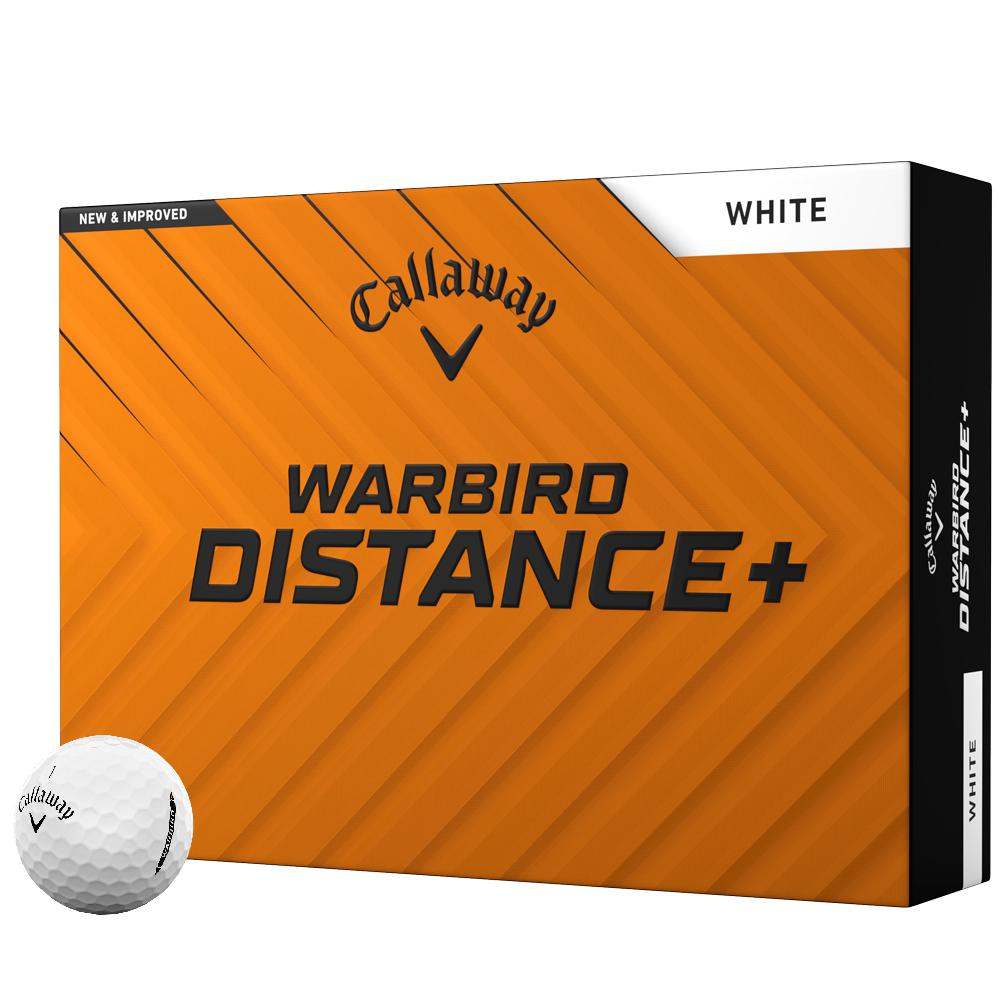
Callaway Warbird Golf Balls Review
Real tee distance, paid for with feel and greens that will not hold
Below Average
Tour Issue Score 6.4 · Ranked #57 of 76 in Golf Balls
Best for: Distance-first golfers who lose balls often and do not prioritize feel or greenside control; most golfers should choose the Supersoft instead
The Bottom Line
Real tee distance, paid for with feel and greens that will not hold. The Callaway Warbird Golf Balls scores 6.4 out of 10 in our research-based review, a below average mark that puts it at #57 of 76 Golf Balls in our rankings. Its strongest fit: Distance-first golfers who lose balls often and do not prioritize feel or greenside control; most golfers should choose the Supersoft instead.
Full Review
The Short Version
The Callaway Warbird, sold today as the Warbird Distance+, is a two-piece distance ball built around an extra-large, high-energy core, an ionomer cover and 332-dimple HEX Aerodynamics, priced at $21.99 a dozen. It is genuinely long: Today's Golfer's 2025 robot test of 62 balls gave it silver medals for tee-to-green performance at 93 and 78 mph swing speeds. The problem is everything after the tee shot. The same test and years of published reviews describe a firm, clicky feel, weak iron spin and shallow descent that struggle to hold greens, and at this price Callaway's own Supersoft does the value job better for most golfers. This is the rare budget ball we do not recommend for scoring-minded players.
Performance
Distance is the one real strength, and it is documented, not marketing. In the 2025 robot test the Warbird Distance+ carried 270.9 yards with the driver at 114 mph, 209.2 yards at 93 mph and 161.3 yards at 78 mph, with low driver spin (2,346 to 2,683 rpm across speeds) that keeps the ball straight and rolling. HEX Aerodynamics produces a high launch that helps moderate swingers. The scoring numbers collapse from there: 7-iron spin measured 4,273 rpm, ranked 47th of 62 balls tested, with a 44.9-degree descent angle, a combination that flies greens and runs through them. Pitch spin of 5,963 rpm was respectable for a two-piece ball, second among two-piece models in that test, but it cannot rescue approach shots that arrive too hot and too flat to check.
Forgiveness
Low driver spin is real forgiveness for slicers, and the Warbird's tee ball is straight and durable; the ionomer cover resists scuffs and cuts better than soft covers, so a dozen lasts. Around the green the forgiveness runs out. A ball that spins this little with scoring irons offers no margin on firm greens, thin approaches or downhill pins: it lands and releases where a softer, higher-spinning ball would hold. Golfers end up playing a run-up game the course does not always allow, which costs more strokes than the extra tee yards return.
Feel and Sound
Feel is where published criticism is most consistent. Today's Golfer's testers called the Distance+ slightly clicky and clunky, the least pleasant feedback in its class coverage, and comparison reviews describe the Warbird as firm and responsive where the Supersoft is cushioned. Measured compression sits around 90 to 92, firm territory: slower swingers may not compress it fully, and off the putter it produces a hard click with little of the soft feedback that distance control on the greens depends on. Players who grew up on firm distance balls will not mind; anyone who values touch will notice it on every chip and putt.
Value
At $21.99 the Warbird looks like easy value, and for pure durability per dollar it is defensible. The value case fails on comparison, not price. Callaway's Supersoft, reviewed in this catalog, costs about $5 more a dozen, matches or beats the Warbird's usable distance for moderate swing speeds with the lowest driver spin in independent testing, and adds a far softer feel and better short-game manners. Every dollar saved with the Warbird is paid back in approach shots that will not hold. Budget rivals from Srixon and TaylorMade in the same price band also offer softer, more modern two-piece designs. Cheap is not the same as good value.
Who Should Buy It
Only a narrow slice: golfers who lose balls constantly, prioritize tee distance and durability above all else, play courses with soft, receptive greens, and honestly do not care how a ball feels. Everyone else should avoid it. Golfers trying to lower scores, players with slower swings who need a ball they can compress, and anyone who chips and putts for pars should buy the Callaway Supersoft instead, or step up to a urethane ball if greenside spin matters.
Verdict
The Warbird delivers its one promise, distance, and robot testing proves it. It fails the rest of the examination: firm and clicky feel, iron spin ranked near the bottom of a 62-ball test, approach shots that will not hold, and a sibling in the same catalog that does the budget job better for about $5 more. Score it where the research lands: a dated one-trick design that most golfers should skip. This is a research-based review synthesized from published reviews, independent test data, and manufacturer specifications; no personal testing was conducted.
What We Like
- Genuinely long: silver medals for tee-to-green performance at 93 and 78 mph in Today's Golfer's 2025 robot test of 62 balls
- Low driver spin (2,346 to 2,683 rpm in robot testing) keeps tee shots straight with strong roll-out
- Durable ionomer cover resists cuts and scuffs, so a dozen survives more rounds than soft-cover rivals
- HEX Aerodynamics promotes a high launch that helps moderate swing speeds
What to Consider
- Feel rated clicky and clunky in Today's Golfer's 2025 robot test coverage, the weakest feedback among comparable budget balls
- 7-iron spin of 4,273 rpm ranked 47th of 62 balls in the 2025 robot test, with shallow descent, so approach shots struggle to hold greens
- Firm compression around 90 to 92 feels harsh for slower swingers and gives a hard click off the putter
- Outclassed at its own price point: the Callaway Supersoft costs about $5 more with softer feel, straighter low-spin flight and better short-game manners
Specifications
| Construction | 2-piece with extra-large, high-energy core and ionomer cover |
|---|---|
| Compression | About 90 to 92 (firm for a budget ball) |
| Dimples | 332 HEX Aerodynamics for high launch and reduced drag |
| Flight | High launch, low driver spin, long roll-out; low iron spin and shallow descent on approaches |
| Options | White and yellow; dozen pricing $21.99 (sold as Warbird Distance+) |
Score Breakdown
Scores are research-based, drawn from manufacturer specs, tour adoption, and published independent test data. How we score
More Balls Reviews
All Balls →
Titleist
Titleist Pro V1x Golf Balls (2025)
Callaway
Callaway Chrome Tour X Golf Balls
Titleist
Titleist Pro V1 Golf Balls (2025)
Callaway
Callaway Chrome Tour Triple Diamond Golf Balls
Srixon
Srixon Z-Star Diamond Golf Balls
Maxfli
Maxfli Tour X Golf Balls
Srixon
Srixon Z-STAR XV DIVIDE Golf Balls
TaylorMade