
Tour Edge · Fairway Woods Review
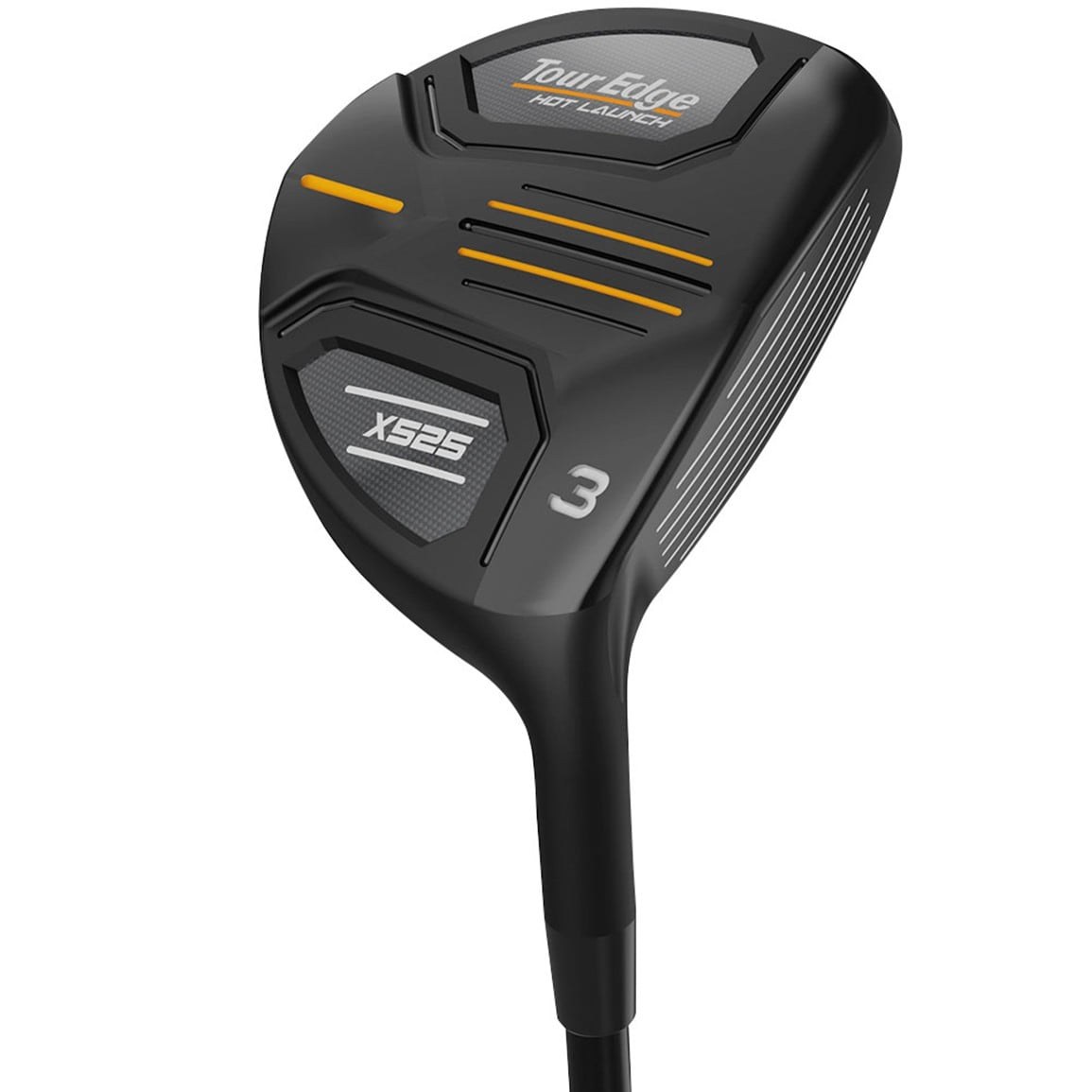
Tour Edge Hot Launch X525 Fairway Wood Review
Extreme launch and slice help locked into one high spin draw, at the same $169.99 as its more versatile E525 sibling
Solid
Tour Issue Score 6.7 · Ranked #25 of 25 in Fairway Woods
Best for: Chronic slicers with medium to slower swing speeds who cannot elevate a fairway wood today; improvers, draw players, faster swingers, and anyone who shapes shots or plays in wind should avoid it
The Bottom Line
Extreme launch and slice help locked into one high spin draw, at the same $169.99 as its more versatile E525 sibling. The Tour Edge Hot Launch X525 Fairway Wood scores 6.7 out of 10 in our research-based review, a solid mark that puts it at #25 of 25 Fairway Woods in our rankings. Its strongest fit: Chronic slicers with medium to slower swing speeds who cannot elevate a fairway wood today; improvers, draw players, faster swingers, and anyone who shapes shots or plays in wind should avoid it.
Full Review
The Short Version
The Tour Edge Hot Launch X525 Fairway Wood is the extreme game improvement entry in the 525 line: a 17-4 stainless steel head with heel weighted offset, a Houdini Sole, Ridgeback crown and Diamond Face VFT, an ultra shallow face, and a lightweight UST Mamiya Helium shaft, in lofts from a 16 degree 3 wood to a 27 degree 11 wood at $169.99. It does its one job well. It launches the ball high and turns it left. The problem, documented across published testing, is that it does almost nothing else: one flight, high spin, a fixed hosel, and a same price sibling, the E525, that Plugged In Golf found just as fast and far more versatile. Its X525 driver, hybrid and irons siblings score 6.8, 6.6 and 6.9 in this catalog on the same tradeoffs, and the fairway wood lands in the same place.
Performance
Launch is not the question. Plugged In Golf found the X525 strongly geared toward producing a draw and elevating every strike, with the stock shot bending right to left, and Driving Range Heroes calls the draw flight very automatic, adding that if you do not struggle with the right miss, you should consider the E525 instead. The performance cost is spin and control. Plugged In Golf found both 525 fairway woods fairly high launching and high spinning, and attributed part of that to a stock shaft it described as lighter and softer than a typical gamer shaft. High launch plus high spin is a ballooning flight that gives back carry in wind and as swing speed rises, and Tour Edge itself positions the X525 for medium to slower swing speeds. There is also no escape hatch: no published spec lists an adjustable hosel, so loft, lie and face angle are fixed for the life of the club.
Forgiveness
Forgiveness is the honest strength, and it is extreme as advertised. Plugged In Golf credits the shallow face and Houdini Sole, whose triangular shape pushes the center of gravity extremely low, for making thin strikes rise anyway, noting that even bottom groove shots will climb. Driving Range Heroes likewise found the Houdini Sole makes a real difference to turf interaction, letting the head glide through the ball from a variety of lies. Diamond Face VFT, with 35 diamond shapes per MyGolfSpy, keeps ball speed up across the face, and Plugged In Golf found no meaningful ball speed difference between the X525 and the E525. If your fairway wood problem is contact and elevation, this head solves it. The catch is that forgiveness here is inseparable from the draw bias doing the solving.
Feel and Sound
Feel and sound are where the budget shows. Plugged In Golf describes the X525 sound as high pitched and metallic with a springy resonance, fairly quiet off center and slightly louder on perfect strikes, and it notes that while volume told a story about strike quality, the character of the sound was a less reliable indicator. Feedback through the hands was reasonable and the feel of impact sat in the middle of the bell curve, neither super solid nor thin. Driving Range Heroes heard a mid pitched crack and a firmer, more powerful sensation from the Ridgeback structure. At address, Plugged In Golf notes the X525 is the more compact of the two 525 fairways, but the offset immediately marks it as a higher handicapper club, a look many players will not accept.
Value
The sticker is the defense: $169.99 when mainstream fairway woods pass $300, and Plugged In Golf closes its review by applauding the price. The value problem is internal. The same $169.99 buys Tour Edge's own E525 fairway wood, which the same testing found equally fast, near neutral in flight, shapeable in both directions, and fitted with a slightly taller face that is more inviting off the tee. Paying the same money for the one flight version only makes sense while the slice is severe. Add a fixed hosel, a single lightweight stock shaft family, and the Hot Launch line's thin resale and demo presence, and the X525 is a club you buy for a problem you hope to outgrow, with little value left when you do.
Who Should Buy It
Buy it only if you slice your fairway woods, swing at medium to slower speeds, and cannot get a 3 or 5 wood airborne today. Avoid it if you are taking lessons or improving, because the heel weighted offset and draw bias cannot be dialed back. Avoid it if you play a draw already, flight the ball on purpose, or play in wind, where its high spin flight gives back distance. Avoid it if you hit fairway woods off the tee often, where the shallow face is the weaker tool. The better alternatives in this catalog are Tour Edge's own Exotics E725 Fairway Wood, rated 8.4 here, and the Exotics C725 Fairway Wood, rated 8.5, both built with premium face materials and far broader fitting range.
Verdict
The X525 fairway wood is an honest slice and launch aid trapped in a single flight. Extreme thin strike forgiveness and a $169.99 price cannot offset high spin, a locked in draw, no adjustability, and a same price sibling that does more. It scores 6.7, in line with its X525 driver, hybrid and iron siblings in this catalog. Buy the E525 at the same money, or step up to the Exotics line. This is a research-based review.
What We Like
- Thin strike rescue is real: Plugged In Golf credits the shallow face and Houdini Sole, with its triangular sole and extremely low center of gravity, for making even bottom groove shots rise, and Driving Range Heroes found the sole glides smoothly through turf from varied lies
- Easy, high launch for slow swingers: both Plugged In Golf and Driving Range Heroes confirm effortless elevation, the core job of an extreme game improvement fairway wood
- Diamond Face VFT preserves ball speed on mishits: Plugged In Golf found strong ball speed across much of the face and no meaningful ball speed difference against the E525, and MyGolfSpy notes the 35 diamond shapes behind the face
- Full loft ladder at one low price: 3 wood at 16 degrees through an 11 wood at 27 degrees, with left hand options in the 3, 5 and 7 woods per Tour Edge, all at $169.99
- Slice correction works as advertised: Driving Range Heroes calls the draw flight very automatic and the offset easy to square, which is exactly the help its target player is buying
What to Consider
- One flight only: Plugged In Golf found the X525 strongly geared toward producing a draw, with the stock shot bending right to left, while its E525 sibling keeps a near neutral flight that can be shaped in both directions; there is no adjustable hosel in any published spec to soften the bias as a swing improves
- High launch with high spin: Plugged In Golf found both 525 fairway woods fairly high launching and high spinning, a flight that balloons and costs carry into the wind and for moderate swing speeds, and it attributed part of that to the light, soft stock shaft
- The draw correction is locked in by hardware: heel weighted offset in a 17-4 stainless steel head per MyGolfSpy and Tour Edge, so a player whose slice fades with practice is left fighting a built in hook bias
- Sound and feedback trail the class: Plugged In Golf describes a high pitched, metallic sound with a springy resonance, quieter off center, and notes the character of the sound was a less reliable strike indicator, with feel in the middle of the bell curve
- Same money buys the more versatile sibling: the E525 fairway wood is also $169.99, and Plugged In Golf found no meaningful ball speed gap between the two, while the E525 adds a taller face that is more inviting off the tee and a flight you can shape
- Budget build signals throughout: fixed hosel, a single lightweight stock shaft family aimed at medium to slower speeds per Tour Edge, and the Hot Launch line's weak resale and demo availability outside specialist retailers
Specifications
| Construction | 17-4 stainless steel, heel weighted offset anti slice design, ultra shallow face, per Tour Edge and MyGolfSpy |
|---|---|
| Lofts | 3 wood 16 degrees, 5 wood 20, 7 wood 23, 9 wood 25, 11 wood 27; right hand all lofts, left hand 3, 5 and 7 woods, per Tour Edge |
| Shaft | UST Mamiya Helium graphite with Nanocore Technology, lightweight shaft aimed at medium to slower swing speeds, fixed hosel with no adjustability listed in published specs |
| Technology | Houdini Sole with ultra low center of gravity, Ridgeback crown structure, Diamond Face VFT with 35 diamond shapes per MyGolfSpy, CPL Diamond Face construction |
Score Breakdown
Scores are research-based, drawn from manufacturer specs, tour adoption, and published independent test data. How we score
More Accessories Reviews
All Accessories →
Mizuno
Mizuno JPX ONE Fairway Wood
TaylorMade
TaylorMade Qi4D Fairway Wood
Callaway
Callaway Quantum Max Fairway Wood
Ping
PING Hoofer 14 Stand Bag
Golf Pride
Golf Pride Tour Velvet Grips
Callaway
Callaway Elyte Ti Fairway Wood
FootJoy
FootJoy StaSof Golf Glove
Golf Pride