
TaylorMade · Drivers Review
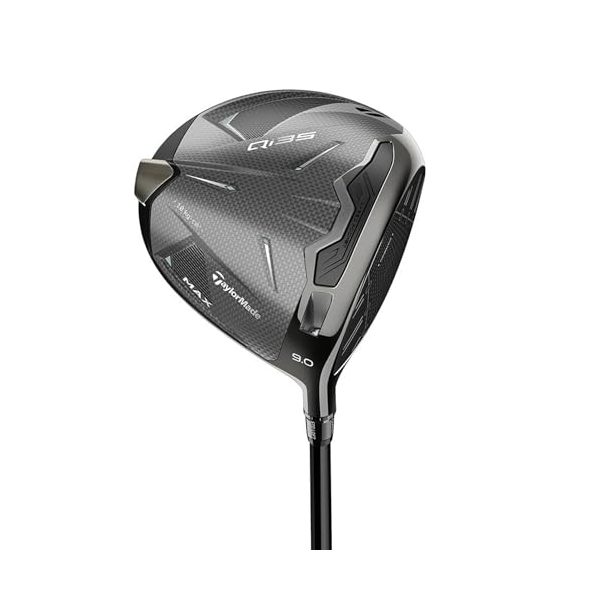
TaylorMade Qi35 Max Driver Review
10K MOI forgiveness with real ball speed
Excellent
Tour Issue Score 9.0 · Ranked #21 of 65 in Drivers
Best for: Mid- to high-handicap golfers who want maximum forgiveness, stability, and high launch off the tee
The Bottom Line
10K MOI forgiveness with real ball speed. The TaylorMade Qi35 Max Driver scores 9.0 out of 10 in our research-based review, a excellent mark that puts it at #21 of 65 Drivers in our rankings. Its strongest fit: Mid- to high-handicap golfers who want maximum forgiveness, stability, and high launch off the tee.
Full Review
The Short Version
The TaylorMade Qi35 Max is the maximum-forgiveness member of the 2025 Qi35 family: a 460cc head built around a 10K MOI figure, a very low center-of-gravity projection, and a 34-gram tungsten weight in a new symmetric Inertia Generator. It won Golf Digest Hot List Gold in 2025 and carries a 4.7 out of 5 customer rating on TaylorMade's own store, as reported by Golfstead. Where the standard Qi35 chases ball speed, the Max chases fairways.
Performance
TaylorMade designed the Max for efficient launch and spin across a larger area of the face. The fourth-generation Carbon Twist Face, Infinity Carbon Crown, and Thru-Slot Speed Pocket support ball speed, while the low CG projection is intended to launch the ball high with manageable spin. National Club Golfer's tester averaged a 262-yard carry and 162 mph ball speed in its published review, strong numbers for a forgiveness-first head, and TaylorMade's own player and robot testing, cited in the same coverage, found dispersion roughly 15 percent tighter than previous models. Golfer Geeks' launch-monitor session recorded a 255-yard carry, and its verdict praised high launch, carry, and ample distance alongside the forgiveness.
Forgiveness
Forgiveness is the entire point of this driver, and published testing treats it as close to best in class. Golfstead scored the Qi35 Max at 9.9 for forgiveness in its review system, noting that it keeps tee shots playable on poor contact, and its testers describe a head that stays stable through heel, toe, and low-face strikes. The 10K MOI construction and high-inertia shape resist twisting at impact, which is what turns a slice-prone miss into a rough-line drive instead of a lost ball. The trade-off, noted by Golfstead, is muted feedback: the head is so stable that diagnosing exactly where a miss occurred is harder than with the standard Qi35.
Feel and Sound
Published reviewers are positive here. Golfstead scored sound and feel at 9.4, describing a powerful sensation at impact, and Golfer Geeks lists premium sound and feel among the driver's strengths, a slight improvement over the Qi10 generation. The multi-material construction, combining chromium carbon, steel, aluminum, tungsten, and titanium, gives the Max a solid, composed impact character rather than the louder crack of an all-titanium head. The large profile sits square behind the ball and, cosmetics aside, inspires confidence at address.
Value
The Qi35 Max launched at $599.99 and now sells around $499 at major retailers, a typical first-cycle discount for a flagship TaylorMade driver. Against its own family it is fairly priced: the same money as the standard Qi35 at launch, with a clearer job description. Golfer Geeks' main value caution is for existing Qi10 Max owners, since the gains over that driver are incremental rather than dramatic. For golfers upgrading from anything older, or moving down from a low-spin head they cannot control, the Max's fairway-finding return on investment is easy to justify.
Who Should Buy It
The Qi35 Max suits mid to high handicappers, golfers in the upper teens and beyond, and anyone whose big miss costs them strokes. It fits players who want high launch without ballooning spin, moderate swing speeds that need stability help, and slicers who want a head that resists the right miss; TaylorMade lists a slight draw flight bias for the model. Low handicappers who work the ball both ways, and players who want movable-weight tuning, should look at the standard Qi35 or Qi35 LS instead, since the Max has a fixed-weight design.
Verdict
The Qi35 Max is the honest driver's driver: elite published forgiveness scores, real ball speed, high launch, and a discounted street price. It will not reward shot-shaping artistry, and Qi10 Max owners can wait, but for the golfer whose rounds leak strokes off the tee, it is one of the most effective fixes in the 2025 driver market. This is a research-based review synthesized from published reviews, independent test data, and manufacturer specifications; no personal testing was conducted.
What We Like
- 10K MOI with a very low CG projection for efficient launch and spin across a larger area of the face
- Golf Digest Hot List Gold 2025 and a 4.7/5 customer rating on TaylorMade's store (via Golfstead)
- Golfstead scored forgiveness at 9.9 in its published review system
- Symmetric Inertia Generator with a 34g tungsten weight anchors the high-inertia design
- Published tester averages of 255-262 yards carry show real speed for a max-forgiveness head
- Now sells around $499, down from the $599.99 launch price
What to Consider
- Fixed-weight head with no movable weights, so flight tuning is limited to the loft sleeve
- Stability mutes strike feedback, making it harder to diagnose mishits (Golfstead)
- Incremental gains over the Qi10 Max; current owners of that driver can wait
- Cosmetics divided reviewers, with Golfer Geeks rating the looks a step down from the Qi10
Specifications
| Construction | Multi-material chromium carbon, steel, aluminum, tungsten, and titanium; Infinity Carbon Crown |
|---|---|
| Key Tech | 10K MOI with low CG projection; symmetric Inertia Generator with 34g tungsten weight; fourth-generation Carbon Twist Face; Thru-Slot Speed Pocket |
| Lofts | 9.0, 10.5, and 12.0 degrees; 460cc head; 45.75-inch length; 4-degree loft sleeve |
| Shaft Options | Fujikura AirSpeeder 2025 and Mitsubishi Diamana T+ 60 stock options; Golf Pride Z-Grip |
Score Breakdown
Scores are research-based, drawn from manufacturer specs, tour adoption, and published independent test data. How we score
More Drivers Reviews
All Drivers →
Callaway
Callaway Quantum Max Driver
Callaway
Callaway Quantum Triple Diamond Max Driver
PING
PING G440 K Driver
TaylorMade
TaylorMade Qi4D LS Driver
Mizuno
Mizuno JPX ONE Hybrid
PING
PING G430 MAX 10K Driver
PXG
PXG 0311 Black Ops Driver
TaylorMade