
Scotty Cameron · Putters Review
Scotty Cameron Phantom 5 Putter (2026) Review
The softest face Scotty Cameron has put in a mallet, in the tour-proven compact wingback.
Excellent
Tour Issue Score 9.0 · Ranked #6 of 38 in Putters
Best for: Better players with a straight to slight-arc stroke who want mallet stability in a compact, blade-like package and premium milled feel.
The Bottom Line
The softest face Scotty Cameron has put in a mallet, in the tour-proven compact wingback.. The Scotty Cameron Phantom 5 Putter (2026) scores 9.0 out of 10 in our research-based review, a excellent mark that puts it at #6 of 38 Putters in our rankings. Its strongest fit: Better players with a straight to slight-arc stroke who want mallet stability in a compact, blade-like package and premium milled feel..
Full Review
The Short Version
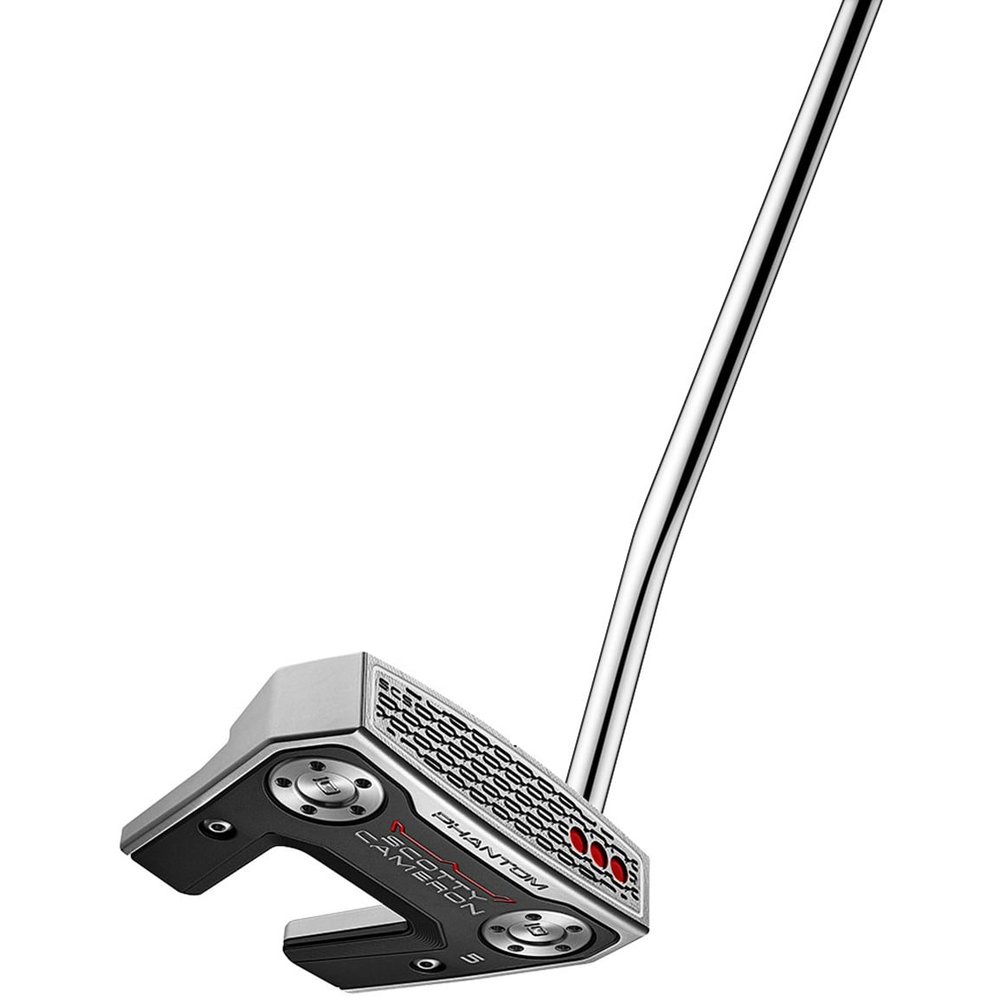
The 2026 Phantom 5 is Scotty Cameron's compact wingback mallet rebuilt around feel. The headline change is a full-face Studio Carbon Steel (SCS) insert with chain-link milling, the same face concept that debuted in the Studio Style blades, now carried into the mallet line for the first time. GOLF.com called the insert a genuine breakthrough for the brand, noting that carbon steel damps vibration better than the Teryllium it replaces, while the chain-link pattern reduces contact points to soften sound without killing feedback. Around that face, the head keeps the shape that made the Phantom 5 the most popular mallet in the family: small enough to please blade players, stable enough to help them.
Performance
Performance starts with the tour record. The Phantom 5 shape spent more than a year in prototype form on the PGA Tour, and published coverage credits wins by Justin Thomas, Russell Henley and the 2025 FedEx St. Jude champion to Phantom 5 prototypes before the retail launch. The standard Phantom 5 uses a mid-bend shaft and a near face-balanced setup with minimal toe hang, which Scotty Cameron positions for straight to slight-arc strokes. Reviewers consistently praise how square and quiet the head stays through the stroke, and the single sightline keeps aiming simple. Golf Digest's equipment team highlighted the wider range of neck options across the 2026 line, and the 5 head alone comes in four configurations, including the new low-torque Onset Center version, so stroke matching is unusually precise for a mallet.
Forgiveness
Forgiveness is mallet-grade without mallet bulk. The multi-material build pairs a milled stainless body with a lightweight aluminum sole plate and adjustable sole weights, pushing mass to the perimeter of the wingback shape. MyGolfSpy's launch coverage explained the hidden work behind the insert: removing face material weakened the winged heads, so Cameron added a redesigned internal cavity, a back wall and stiffening ribs, secured with the visible Button Back screws, to keep the structure rigid and ball speed stable on off-center strikes. It will not match a large, high-MOI mallet on heel and toe misses, but for a head this compact the stability margin over a blade is substantial.
Feel and Sound
Feel is the reason this generation exists. Review roundups describe the SCS insert as the softest, most premium face Scotty Cameron has produced for a mallet, with a short, low impact tone and none of the harsh edge older mallet faces could produce. Golf Digest noted that carbon steel was chosen specifically for its higher damping capacity, which shortens impact vibration. The one honest split in published testing is distance control: some testers praised the lighter, compact head, while Hot List feedback found it harder to manage on long lag putts. That is worth knowing before buying, because feel this soft rewards a practiced pace stroke and punishes guesswork less predictably than a firmer face.
Value
Value is the hard part. This TGW listing is priced at $549, above the $499 standard Phantom price and at the very top of the mallet market, where forum and review discussion regularly questions whether the performance gap over TaylorMade and PING rivals justifies the premium. The counterargument is build quality, resale strength, the tour-validated shape and a face material no direct rival offers. Golfers paying this much are buying the last few percent of feel and finish, and should be honest with themselves about that.
Who Should Buy It
Buy the Phantom 5 if you play a straight to slight-arc stroke, want mallet insurance without a large head behind the ball, and rank feel at the top of your putter criteria. Blade players curious about mallets will find this the easiest transition in the category. Strong-arc players should test the 5.5 with its jet neck instead, and golfers who miss across the whole face should look at the larger Phantom 7 or a maximum-MOI design.
Verdict
The 2026 Phantom 5 earns its flagship status on feel and shape: the Studio Carbon Steel insert is a real material advance, the Button Back construction protects ball speed, and the compact wingback remains the mallet blade players actually want to look at. Price and the divided verdict on long-putt distance control keep it from a perfect score. This is a research-based review: we analyzed specs, manufacturer data, and published independent test data; no personal testing was conducted.
What We Like
- New full-face Studio Carbon Steel insert with chain-link milling, described by GOLF.com as the softest feeling face Scotty Cameron has put in a mallet, with more damping than the previous Teryllium
- Tour-proven compact wingback shape: Justin Thomas won with Phantom 5 prototypes before the retail release, per published coverage
- Deeper face, rounded crown and flatter sole from Tour feedback, so the head sits squarer across hand positions
- Redesigned Button Back cavity with stiffening ribs keeps ball speed and sound consistent after the face material change, per GOLF.com and MyGolfSpy
- Near face-balanced mid-bend shaft with minimal toe hang fits straight-back, straight-through strokes
- Single sightline keeps the address picture clean compared with multi-line rivals
What to Consider
- Premium pricing: $549 at TGW for this listing, above the $499 standard Phantom MAP and well above premium mallets from TaylorMade and PING
- Distance control divided published testers: Golf Digest Hot List feedback cited in review coverage found the lighter, compact head harder to manage on long putts
- Near face-balanced mid-bend setup suits straight to slight-arc strokes only; strong-arc players should look at the 5.5 jet neck instead
- Compact head gives up some stability to larger Phantom 7 and Spider-class mallets on badly off-center strikes
- Four configurations in the same head (5, 5.2, 5.5, 5 OC) make picking the wrong neck an expensive mistake without a fitting
Specifications
| Alignment | Single sightline on the standard Phantom 5 (TGW listing also references milled topline dots on its configuration) |
|---|---|
| Head | Compact wingback mallet, precision milled 303 stainless steel with 6061 aircraft-grade aluminum sole plate and adjustable sole weights |
| Lie / Length | 3.5 degrees loft; 70 degrees lie; stock lengths 33, 34 and 35 inches per Titleist specifications |
| Shaft / Balance | Mid-bend shaft, near face-balanced with minimal toe hang; gray Full Contact grip with chain-link texture |
| Technology | Full-face Studio Carbon Steel insert with chain-link face milling; Button Back cavity construction with stiffening ribs |
Score Breakdown
Scores are research-based, drawn from manufacturer specs, tour adoption, and published independent test data. How we score
More Putters Reviews
All Putters →
L.A.B. Golf
L.A.B. Golf OZ.1i Putter
TaylorMade
TaylorMade Spider Tour X Putter
L.A.B. Golf
L.A.B. Golf OZ.1 Putter
Bettinardi
Bettinardi INOVAI 6.0 Putter
Odyssey
Odyssey Ai-ONE Square 2 Square Max Putter
TaylorMade
TaylorMade Spider Tour Putter
Evnroll
Evnroll ER2 Putter
L.A.B. Golf