
PXG · Wedges Review
PXG 0311 Sugar Daddy III Wedges Review
Fully milled spin and forged feel, at half the original Sugar Daddy price
Very Good
Tour Issue Score 8.6 · Ranked #18 of 24 in Wedges
Best for: Golfers who want a fully milled, forged feel wedge and will use a fitting to pick grind and swing weight
The Bottom Line
Fully milled spin and forged feel, at half the original Sugar Daddy price. The PXG 0311 Sugar Daddy III Wedges scores 8.6 out of 10 in our research-based review, a very good mark that puts it at #18 of 24 Wedges in our rankings. Its strongest fit: Golfers who want a fully milled, forged feel wedge and will use a fitting to pick grind and swing weight.
Full Review
The Short Version
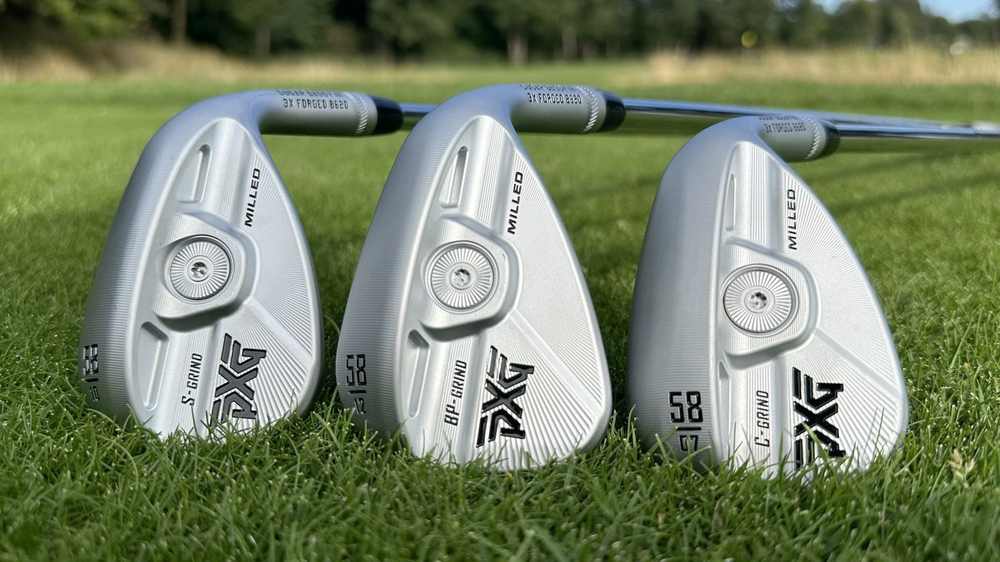
The Sugar Daddy III is PXG's fully milled scoring wedge, triple forged from 8620 soft carbon steel and then CNC milled to its final shape, grooves, sole and weight pockets included. The headline changes over the Sugar Daddy II are a wider groove profile packed tighter together for one extra groove, a third sole grind, and weight moved higher in the head. At $299.99 in chrome it remains a premium wedge, but it now costs the same as its history suggests it never would: the original Sugar Daddy launched at $650.
Performance
Spin is the product here, and the published testing backs the claim. PXG widened the grooves to 0.033 inches and tightened the spacing, fitting 16 grooves where the previous model had 15, so the ball cover engages more edge on full and partial shots. Golf Monthly's testing found strong spin from the fairway and, more tellingly, similar ball reaction on shots up to 70 yards played from the rough, the lie where groove design earns its money. Twin milled pockets in the back of the head move roughly eight grams from the middle of the head toward the top and bottom, raising the center of gravity for a flatter, more controlled flight on full swings without giving up greenside check.
Forgiveness
Forgiveness in a wedge is mostly sole design, and the three grind system covers the realistic range of swings. The new S grind, at 10 degrees of bounce with a tapered traditional sole, runs across every loft from 50 to 60 degrees and suits varied turf and both square and open face shots. The BP grind, named for founder Bob Parsons, pairs 12 degrees of bounce with a wide sole, a blunt leading edge and full face grooves on the higher lofts, and reviewers found it genuinely hard to dig, a real option for steeper swingers and soft sand. The C grind, at 7 degrees with a narrow sole, is the low bounce player's tool for firm turf and manufactured shots. It is a smaller matrix than the Vokey lineup, but most golfers only ever use one or two grinds, and these three are sensibly spaced.
Feel and Sound
This is where the triple forging and full milling show up. Reviewers consistently describe a soft, smooth strike with a muted click, the kind of dense feedback better players use to judge strike quality on partial swings. The head shape also moved in a more traditional direction: Golf Monthly noted a more compact, refined profile than the Sugar Daddy II, closer in spirit to a classic tour wedge at address. One durability note from the same testing: the chrome heads marked up visibly within 18 holes, so golfers who care about a pristine finish should expect bag wear early or pay the $50 premium for the Xtreme Dark DLC finish.
Value
Context matters. At $299.99 the Sugar Daddy III costs about $100 more per wedge than a Vokey SM11 or a PING s259, and a three wedge set approaches $900 before any fitting fees. Against its own family history, though, the price has halved from the original and fallen $200 from the Sugar Daddy II, while the milling process and fitting support have improved. PXG's Precision Weighting, a large rear weight a fitter can swap in 2 gram increments to set swing weight during a fitting, is a real service rivals do not bundle at this level. The value case is strongest for the golfer who will actually use the fitting network; bought blind off a spec sheet, it is an expensive way to guess.
Who Should Buy It
Buy the Sugar Daddy III if you want a milled, forged feel wedge, you play a mix of turf conditions, and you are willing to be fitted for grind and swing weight. The BP grind also makes it a legitimate candidate for higher handicappers who want a premium lob wedge that resists digging. Look elsewhere if your budget caps near $200 per wedge, if you want more than three sole options to fine tune bounce, or if cosmetic wear bothers you, because the chrome finish shows its rounds.
Verdict
The Sugar Daddy III is the most convincing Sugar Daddy yet: real groove and grind upgrades, a more classic head shape, and a price that is premium rather than absurd. It does not outgun the Vokey matrix on choice, but on spin, feel and fitting support it belongs in the top tier conversation. This is a research-based review synthesized from published reviews, independent test data, and manufacturer specifications; no personal testing was conducted.
What We Like
- Wider grooves in a tighter pattern fit 16 grooves on the face for strong spin, including from the rough in published testing
- 3X forged 8620 soft carbon steel, then 100% CNC milled for the soft, dense feel reviewers praise
- Three grinds (S at 10 degrees, BP at 12 with full face grooves, C at 7) cover most swings and turf types
- Precision Weighting lets a fitter set swing weight in 2 gram increments during a PXG fitting
- Price has fallen from $650 for the original and $499 for the Sugar Daddy II to $299.99 in chrome
What to Consider
- About $100 per wedge more than a Vokey SM11 or PING s259, and a three wedge set nears $900
- Only three grinds, so less bounce fine tuning than the Vokey or PING matrices
- Chrome finish marked up visibly within 18 holes in Golf Monthly testing
- No true stock build: PXG sells through its own site and fitters, so specs are chosen at fitting or order
Specifications
| Construction | 3X forged 8620 soft carbon steel, 100% CNC milled head, grooves and sole |
|---|---|
| Finishes | Chrome ($299.99) and Xtreme Dark DLC ($349.99) |
| Grinds | S grind (10 degrees, all lofts), BP grind (12 degrees, 54 to 60), C grind (7 degrees, 58 and 60) |
| Lofts | 50, 52, 54, 56, 58 and 60 degrees |
| Weighting | Precision Weighting rear weight, adjustable in 2 gram increments during a fitting |
Score Breakdown
Scores are research-based, drawn from manufacturer specs, tour adoption, and published independent test data. How we score
More Wedges Reviews
All Wedges →
Mizuno
Mizuno Pro T-1 Wedges
Titleist
Titleist Vokey SM10 Wedges
Titleist
Titleist Vokey SM11 Wedges
Callaway
Callaway Jaws Raw Wedges
Cleveland
Cleveland RTX 6 ZipCore Wedges
Mizuno
Mizuno Pro T-3 Wedges
TaylorMade
TaylorMade Milled Grind 4 Wedges

Callaway