
Mizuno · Drivers Review
Mizuno JPX ONE Driver Review
The world's first NANOALLOY face: accuracy-first speed for moderate swing speeds
Very Good
Tour Issue Score 8.6 · Ranked #42 of 65 in Drivers
Best for: Mid-handicappers and moderate swing speeds who prioritize accuracy, easy launch and a straight flight
The Bottom Line
The world's first NANOALLOY face: accuracy-first speed for moderate swing speeds. The Mizuno JPX ONE Driver scores 8.6 out of 10 in our research-based review, a very good mark that puts it at #42 of 65 Drivers in our rankings. Its strongest fit: Mid-handicappers and moderate swing speeds who prioritize accuracy, easy launch and a straight flight.
Full Review
The Short Version
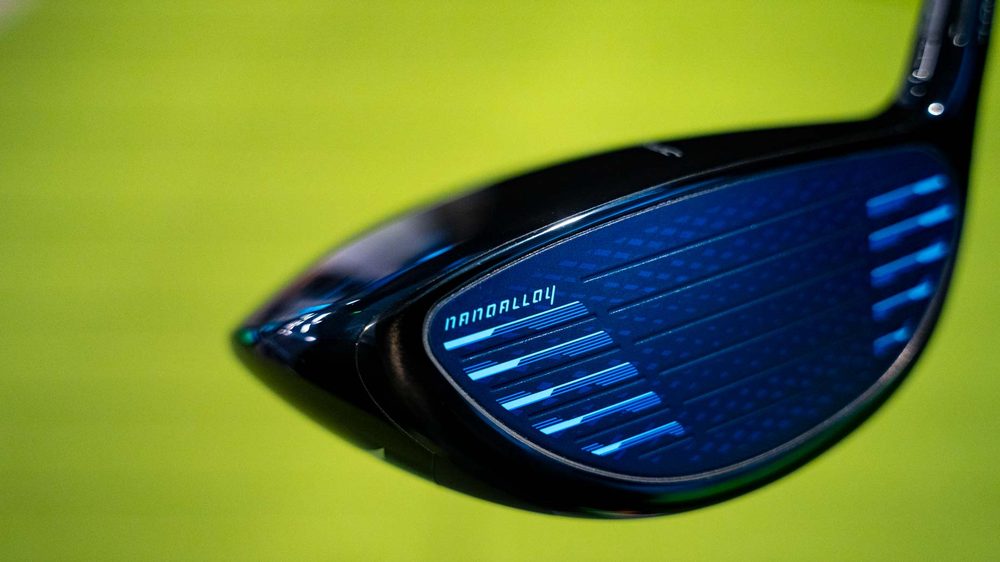
The JPX ONE is Mizuno's first JPX driver in almost a decade, and it arrives with a genuine world first: a NANOALLOY face, a Toray polymer layer bonded over forged titanium that firms up at rest and turns more elastic under impact load. The performance brief is accuracy and consistency rather than raw speed. MyGolfSpy's 42-driver test scored it 8.4 overall with an 8.8 for accuracy, and Today's Golfer found it one of the hardest drivers of 2026 to hit badly. Golfers under roughly 105 mph of swing speed are the target, and for them this is a compelling alternative to the usual big three.
Performance
The engineering, as MyGolfSpy's deep dive explains, is subtle and clever. The roughly one-millimeter NANOALLOY layer lets Mizuno build its titanium face up to 10 percent thinner without durability worries, because the polymer absorbs some of the deformation that would otherwise go into the ball and the face. The result is a head with a modest CT around 220 that still pushes a wider area of the face closer to the COR limit, paired with a new CORTECH variable-thickness structure that Mizuno says expands the high-speed rebound zone by more than 15 percent over the ST-MAX. In GOLF.com's on-course session at Mizuno's Foundry facility, the fitted JPX ONE carried a bunker that needed about 275 yards and produced comfortable, mostly straight shots. Independent testers put ball speeds in the 155 to 162 mph band depending on swing speed: competitive, but a step behind the fastest heads of 2026.
Forgiveness
Forgiveness and accuracy are this driver's calling cards. The larger footprint, higher MOI and straighter-bias geometry (a larger CG angle with reduced face progression, plus an upright lie) produced the 8.8 accuracy score in MyGolfSpy's test, and Today's Golfer's tester, who misses high and toward the toe, reported the ball staying remarkably straight from exactly those impact points, with ball speed holding up across heel, toe, high and low strikes. An 11-gram back weight adds a fitting lever, and the Quick Switch hosel adjusts loft across a wide range (the 10.5 head runs from 8.5 to 12.5 degrees). For a golfer whose dispersion costs more strokes than five yards of carry, this profile is exactly right.
Feel and Sound
Expect volume. GOLF.com's Foundry tester described the JPX ONE as very loud, while noting the sensation of compression survives the noise, and compared the acoustic to Mizuno's composite baseball bats. Other reviewers landed differently: one found the sound somewhat muted and dull but the feel a little clunky and harsh, and several noted the impact does not deliver the dense forged sensation Mizuno iron players expect, a trade of the polymer face construction. What nobody criticizes is the presentation: the blue face and navy carbon crown stand out in a sea of black drivers, and the lightly corded stock grip drew praise as one of the nicest ever fitted to a stock driver.
Value
Golfweek's launch pricing put the JPX ONE at $559, a full $90 under the $649.99 that Callaway and TaylorMade charge for their 2026 flagships, and Mizuno's own list in some channels reads higher, so shop around. At the Golfweek price the value argument is strong: a world-first face material, top-tier accuracy scores and full adjustability for mid-trim money. The honest counterweight is resale and ceiling. Mizuno woods historically discount faster than the big three, and fast swingers leave measurable distance on the table here, so the value is concentrated in the moderate-speed majority rather than the whole market.
Who Should Buy It
Buy the JPX ONE if your swing speed sits under about 105 mph, you value a straight, predictable ball flight over the last few yards, and you want easy launch with a confidence-first look at address. It is also the Mizuno loyalist's long-awaited modern wood. Skip it if you swing fast and already spin the ball plenty: multiple testers found the flight floaty and wind-prone at high speeds, and the lower-spinning JPX ONE Select or a rival low-spin head will serve you better.
Verdict
The JPX ONE does not win the 2026 speed race, and Mizuno never really entered it. What it wins is trust: a straight, stable, easy-launching driver built on the most interesting face material story of the year, at a price below the flagship standard. For the moderate-speed golfer it was designed around, that is a trade worth making. This is a research-based review.
What We Like
- World's first NANOALLOY driver face, developed with Toray: a polymer layer over forged titanium that changes elasticity at impact
- New CORTECH Face is up to 0.35mm thinner, expanding the high-speed rebound zone (CORAREA) by over 15 percent versus the ST-MAX, per Mizuno
- MyGolfSpy 2026 driver test accuracy score of 8.8, the head's standout metric, with testers praising how hard it is to hit a bad shot
- Today's Golfer found forgiveness excellent, with ball speed holding up on heel, toe, high and low strikes
- Distinctive blue face and navy carbon crown, plus a stock Golf Pride Tour Velvet 360 grip reviewers singled out as superb
- Golfweek launch pricing of $559 undercuts the $649 flagship standard set by Callaway and TaylorMade
What to Consider
- MyGolfSpy's 2026 driver test ranked it 27th of 42 overall (8.4), with distance (8.2) the weak category.
- Higher spin than the speed leaders: fast swingers in multiple tests saw a floaty flight that gave up yards, especially into wind.
- Very loud at impact, per GOLF.com's on-course testing at the Foundry, which will not suit every ear.
- Raw ball speed trails the fastest Callaway and TaylorMade heads; one detailed test recorded a smash factor around 1.43.
Specifications
| Key Tech | NANOALLOY face (Toray polymer layer over forged titanium, world first in a driver); CORTECH Face up to 0.35mm thinner with CORAREA over 15 percent larger than ST-MAX; 11g adjustable back weight; Quick Switch adjustable hosel; 460cc head |
|---|---|
| Lofts | 9.0 (7.0 to 11.0), 10.5 (8.5 to 12.5), 12.0 (10.0 to 14.0) degrees; 45.75 inches |
| Shaft Options | Mitsubishi Tensei 1K Blue; Golf Pride Tour Velvet 360 Grey grip |
Score Breakdown
Scores are research-based, drawn from manufacturer specs, tour adoption, and published independent test data. How we score
More Drivers Reviews
All Drivers →
Callaway
Callaway Quantum Max Driver
Callaway
Callaway Quantum Triple Diamond Max Driver
PING
PING G440 K Driver
TaylorMade
TaylorMade Qi4D LS Driver
Mizuno
Mizuno JPX ONE Hybrid
PING
PING G430 MAX 10K Driver
PXG
PXG 0311 Black Ops Driver
TaylorMade