
Gogogo Sport · Rangefinders Review
Gogogo Sport Vpro Rangefinder (GS03) Review
Cheap and capable up close, inconsistent where it counts
Solid
Tour Issue Score 6.7 · Ranked #33 of 33 in Rangefinders
Best for: Budget-first casual golfers who mostly need yardages inside 200 yards and can accept a short service life
The Bottom Line
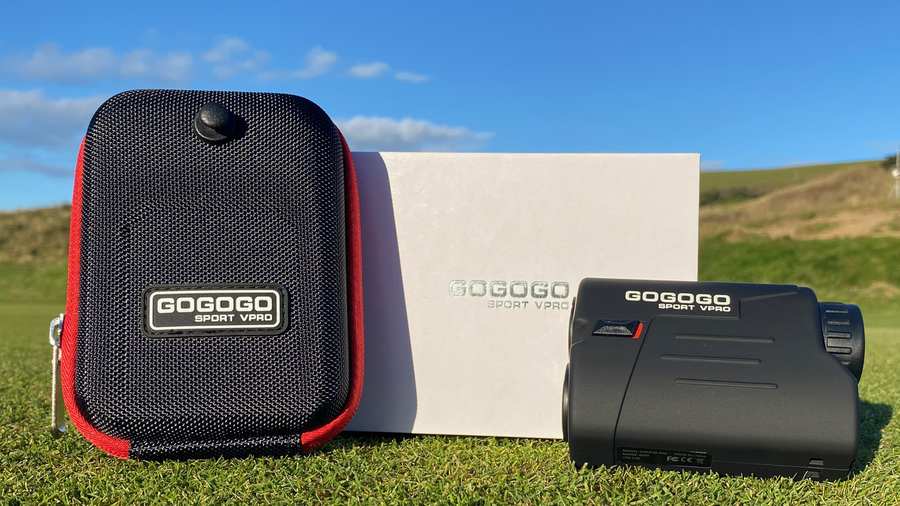
Cheap and capable up close, inconsistent where it counts. The Gogogo Sport Vpro Rangefinder (GS03) scores 6.7 out of 10 in our research-based review, a solid mark that puts it at #33 of 33 Rangefinders in our rankings. Its strongest fit: Budget-first casual golfers who mostly need yardages inside 200 yards and can accept a short service life.
Full Review
The Short Version
The Gogogo Sport Vpro GS03 is the budget rangefinder almost every price-first golfer finds first: 6x magnification, switchable slope, flag lock with vibration, and a street price that routinely lands between $75 and $110, a third of what a Bushnell costs. Inside about 150 yards, independent testing is genuinely kind to it. The problem is everything past that point, and everything after the first season. Published tests and long-term owner reports describe a unit whose flag lock gets unreliable as distances grow, whose readings can drift with extended use, and whose disposable battery and support experience lag the headline spec sheet. It is a usable first rangefinder. It is not a buy-it-once rangefinder.
Performance
Gogogo rates the GS03 at plus or minus 1 yard with flag lock to about 250 yards on current versions, and the strongest independent result supports the short end of that claim: Golf Insider measured an average error of just 0.89 yards across known targets from 50 to 200 yards, with errors of roughly a yard inside 150 yards. The same test showed the error growing to just under 2 yards at 200 yards, and noted the unit sometimes ranging the trees or posts behind the pin on tree-lined holes. Golf Monthly testing found the basic mode quick but admitted it struggled to lock onto flagsticks, with reliable flag ranging again capped around 250 yards. In other words, the laser measures large targets and short flags well, and gets noticeably less certain exactly where a rangefinder earns its keep: long approaches into defended greens.
Accuracy
Accuracy complaints follow a pattern in long-term coverage. A long-term owner review of the GS03 reported that precision declined noticeably over extended use, starting near other testers' numbers and drifting as the unit aged. Owner feedback collected across retail and review sites repeats the themes: inconsistent target locking in wind or against busy backgrounds, occasional misreads on reflective surfaces, and slope-adjusted numbers that felt slightly off next to premium units on steep holes. None of this makes the GS03 useless. A number that is a yard or two off at 180 yards will not hurt most mid-handicappers. It does mean the plus or minus 1 yard on the box should be read as a best case, not a promise, and competitive players who live on exact numbers will feel the gap.
Ease of Use
Day to day, the GS03 is simple: point, press, get a number, feel a vibration buzz when the flag lock engages, and flip the slope switch off when a competition requires it. Scan mode gives continuous readings while you pan. The friction points are small but real. Testers noted stiff buttons, a black-only LCD that is harder to read in low light than the red or auto-bright displays on better units, and a focus quirk in one published review where adjusting the lens pushed the readout text out of focus. Power is the bigger annoyance: the GS03 runs on a disposable CR2 battery rather than USB recharging, and owner reports include batteries arriving dead or draining quickly, with some heavy users replacing batteries far sooner than the up-to-20-rounds best case suggests.
Value
On sticker price alone the GS03 looks like a bargain, and for a golfer who plays a handful of casual rounds a year, it can be. The value case weakens on durability and support. Published roundups record units failing after a single season, functionality issues developing after several months, and vibration function concerns over time. The brand's Trustpilot page sits at 2.8 out of 5, with complaints about dead-on-arrival units and refund disputes, which matters because a cheap rangefinder with a shaky warranty path can cost more than a mid-priced one bought once. Against the Shot Scope Pro L2 at about $150, or a Bushnell Tour V6 at about $300, the GS03 saves real money up front and gives some of it back in risk.
Who Should Buy It
Buy the GS03 if the budget is hard-capped near $100, you mostly need numbers inside 200 yards, and you accept that it may be a two-season purchase. Avoid it if you play competitive golf on exact yardages, if your home course has tree-lined greens that already fool flag lock, or if you want rechargeable power and a support network you can rely on. The better alternatives in this catalog are the Shot Scope Pro L2, which adds a stronger feature set and brand support for modestly more money, and the Bushnell Tour V6, the accuracy benchmark this class is measured against.
Verdict
The GS03 is not a scam and it is not a steal. It is a genuinely capable short-range laser wrapped in inconsistent long-range lock, aging accuracy, disposable power, and uneven support. Scored honestly against what a rangefinder is for, trusted numbers every time you press the button, it lands below the line where we can recommend it over saving a little longer for a better unit. This is a research-based review synthesized from published reviews, independent test data, and manufacturer specifications; no personal testing was conducted.
What We Like
- Very low street price, routinely $75 to $110, a fraction of premium brand lasers
- Switchable slope compensation, so it can be made tournament legal with the slope off
- Independent testing found roughly 1 yard accuracy inside 150 yards
- Flag lock with vibration confirmation and a fast continuous scan mode
- Lightweight at about 184 grams with 6x magnification
What to Consider
- Flag lock gets unreliable beyond about 250 yards and can range trees behind the pin, per Golf Insider and Golf Monthly testing
- Long-term owner reports describe accuracy drifting with extended use, past the claimed plus or minus 1 yard
- Disposable CR2 battery with reports of dead-on-arrival and fast-draining cells, no USB recharging
- Durability and support complaints: units failing within a season and a 2.8 out of 5 brand rating on Trustpilot
Specifications
| Range | Up to 650 to 1000 yards by variant; flag lock rated to 250 yards |
|---|---|
| Magnification | 6x |
| Accuracy | Plus or minus 1 yard (manufacturer claim) |
| Slope | Switchable slope compensation |
| Battery | CR2 disposable (not rechargeable) |
Score Breakdown
Scores are research-based, drawn from manufacturer specs, tour adoption, and published independent test data. How we score
More Rangefinders Reviews
All Rangefinders →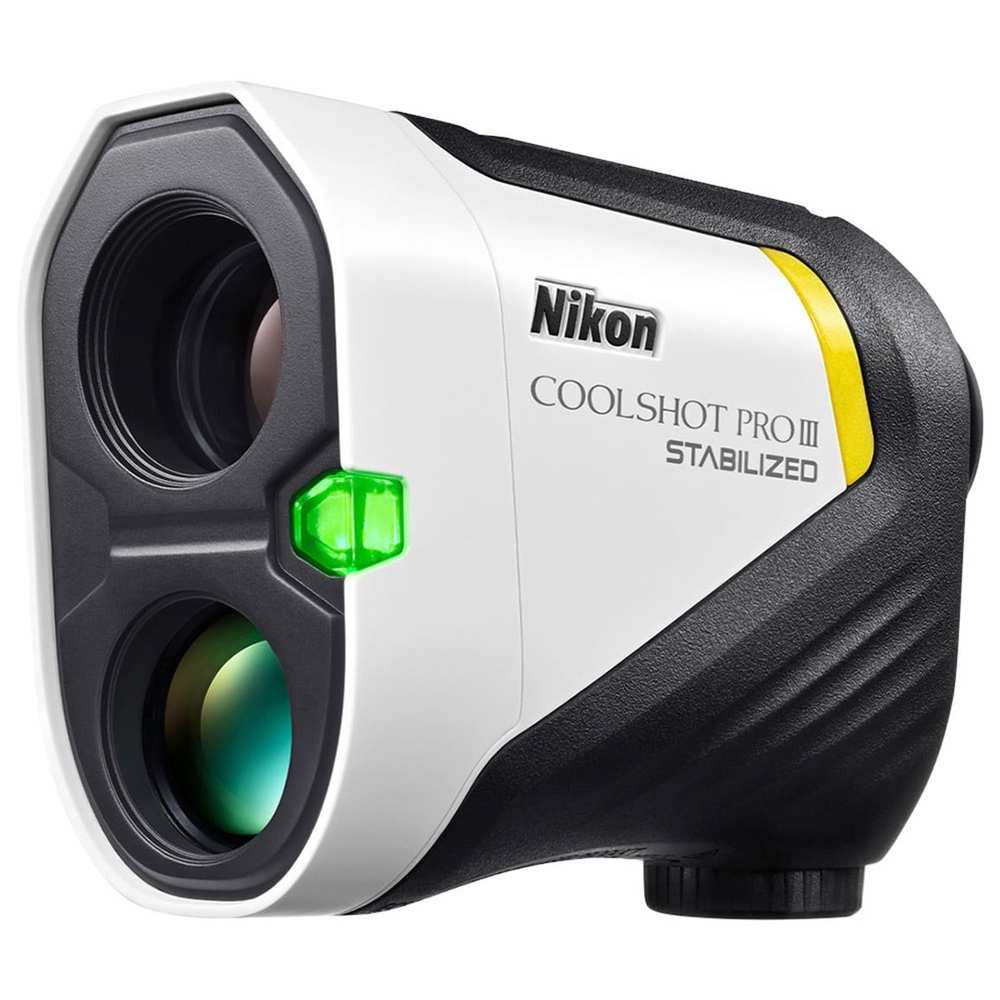
Nikon
Nikon COOLSHOT PROIII Stabilized Rangefinder
Voice Caddie
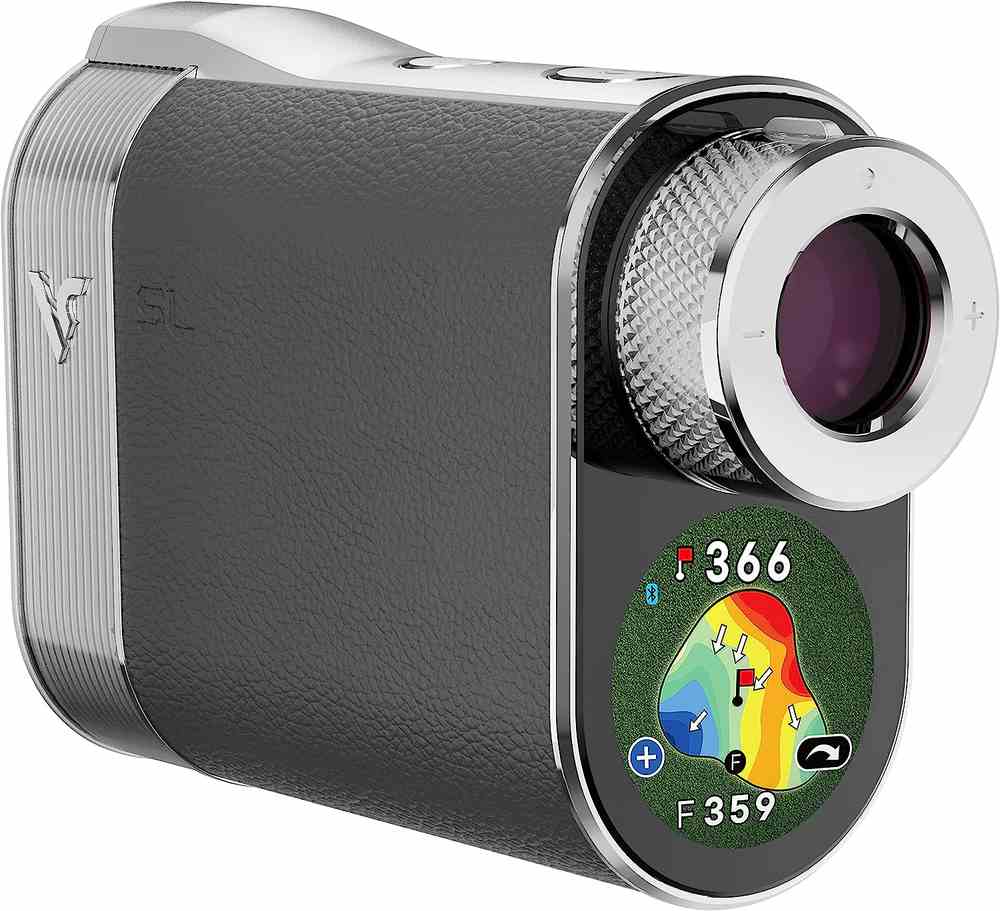
Voice Caddie SL3 Active Hybrid GPS Rangefinder
Bushnell
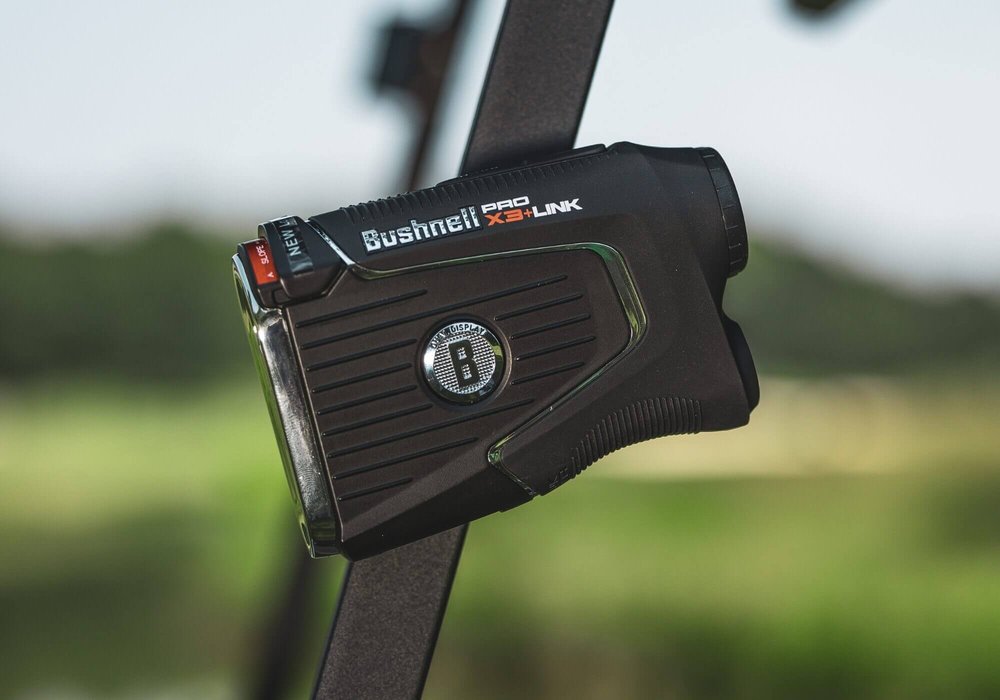
Bushnell Pro X3+LINK Rangefinder
Bushnell
Bushnell Tour Hybrid Rangefinder
Bushnell
Bushnell Tour V6 Shift Rangefinder
Bushnell
Bushnell Tour V7 Shift Patriot Pack Rangefinder
FlightScope
FlightScope Mevo Gen 2 Launch Monitor
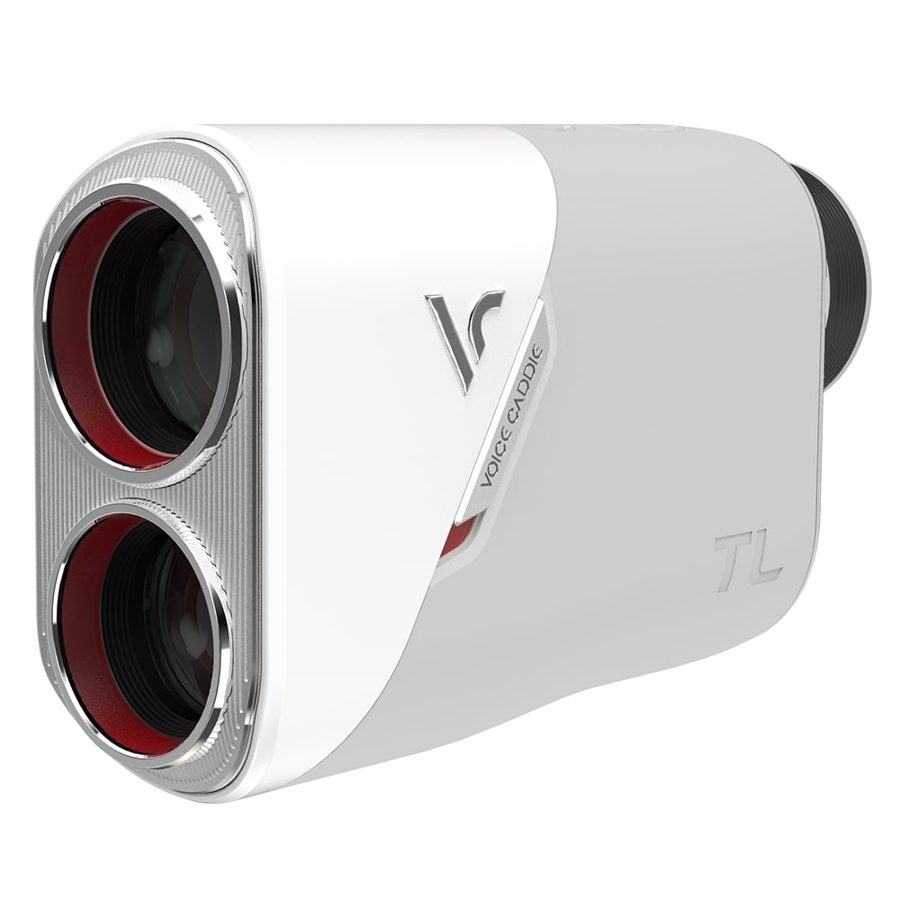
Voice Caddie